Introduction
Marginal Zone Lymphoma (MZL) is a subtype of non-Hodgkin Lymphoma (NHL). If you’ve been diagnosed with MZL you have a type of slow growing blood cancer. This blood cancer affects a type of white blood cells called B-cell lymphocytes (B-cells). Some people with MZL may be cured with treatment, however not everyone can be cured. Some types of MZL do not respond to any of the treatments we have yet. But, because MZL are slow growing cancers, many people still live a long and healthy life with MZL – even without treatment.
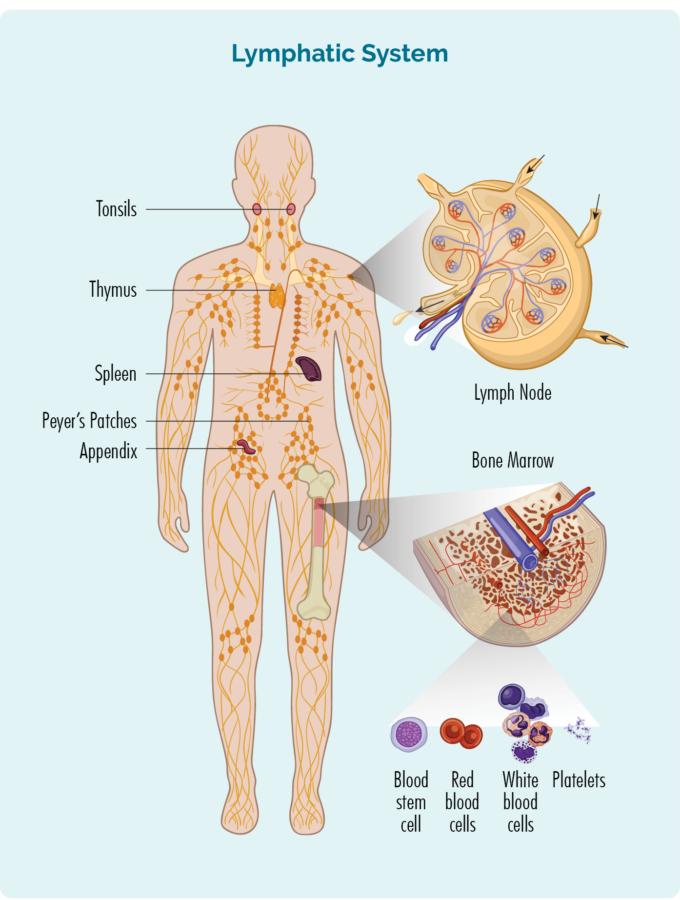
B-cells fight infection and diseases to keep you healthy. They remember infections you had in the past, so if you get the same infection again, your immune system can fight it more effectively. When B-cells don’t grow or work properly, you can be diagnosed with lymphoma. This means you will have cancerous B-cells called lymphoma cells. B-cells can travel to any part of your body. This means your lymphoma cells can also travel to any part of your body.
There are more than 80 different types of lymphoma, and MZL is a common subtype. One in every 10 people diagnosed with non-Hodgkin lymphoma has MZL. There are 3 subtypes of MZL,
- Extra-nodal MZL – this can also be called mucosa-associated lymphoid tissue (MALT) lymphoma. This is a type of MZL that develops outside of your lymph nodes. It can develop in your stomach, small intestine, salivary gland, thyroid gland, eyes, or lungs. It may be called “gastric” if it affects your stomach or small intestines, and “nongastric” if it affects the other areas.
- Splenic MZL – This subtype develops in your spleen. Your spleen is an organ that sits just under your stomach on the left side of your abdomen, and plays an important role in keeping your blood healthy. It also stores a lot of your disease fighting B-cells.
Most people that get MZL are over the age of 60 years, but younger people can get it too.
Signs and Symptoms
Because MZL grows slowly, you may not have any symptoms at first. Many people are diagnosed when they have a blood test, scans, or a physical exam for something else. If you do have symptoms, they may be general symptoms of lymphoma, or specific symptoms based on where the lymphoma is located.
General symptoms of lymphoma may include:
- feeling unusually tired (fatigued)
- feeling out of breath
- bruising or bleeding more easily than usual
- infections that don’t go away, or keep coming back (recurrent)
- sweating at night more than usual
- losing weight without trying
- a new lump in your neck, under your arms, your groin, or other areas of your body (this is caused by lymphoma cells gathering in the follicles of your lymph nodes and making it grow larger). These lumps may or may not hurt, depending on where they are located.
You may have more specific symptoms depending on your subtype:
Nodal MZL –The main symptom of nodal MZL is a lump in your neck, armpit or groin. It might feel rubbery to touch. More information on Nodal MZL can be found on our webpage here.
Extra-nodal or MALT MZL –If you have gastric MALT MZL you may have symptoms related to your gut including pain in your tummy, feeling sick, and heartburn (indigestion). We are not sure what causes this to happen but, people who have infections with a bacteria that causes stomach ulcers, may be at increased risk of developing a gastric MALT MZL. This bacterium is called helicobacter pylori (H. Pylori).
For non-gastric MALT MZL, the symptoms will depend on the area affected. If the MZL is in your thyroid, you may have a lump in your throat or changes to your hormones. If your eyes are affected you may have changes to your sight, and if it is in your lungs you may have changes to your breathing, or chest pain. More information on MALT MZL can be found on our webpage here.
Splenic MZL – The most common symptom you might get with this subtype is feeling full sooner than you normally would, even if you have only a little bit to eat. You may also have pain in your tummy. Like with MALT MZL, we’re not sure what causes splenic MZL to occur, but people who have had a viral infection of their liver, called hepatitis C have an increased risk of developing splenic MZL. More information on splenic MZL can be found on our webpage here.
Diagnosis and Staging
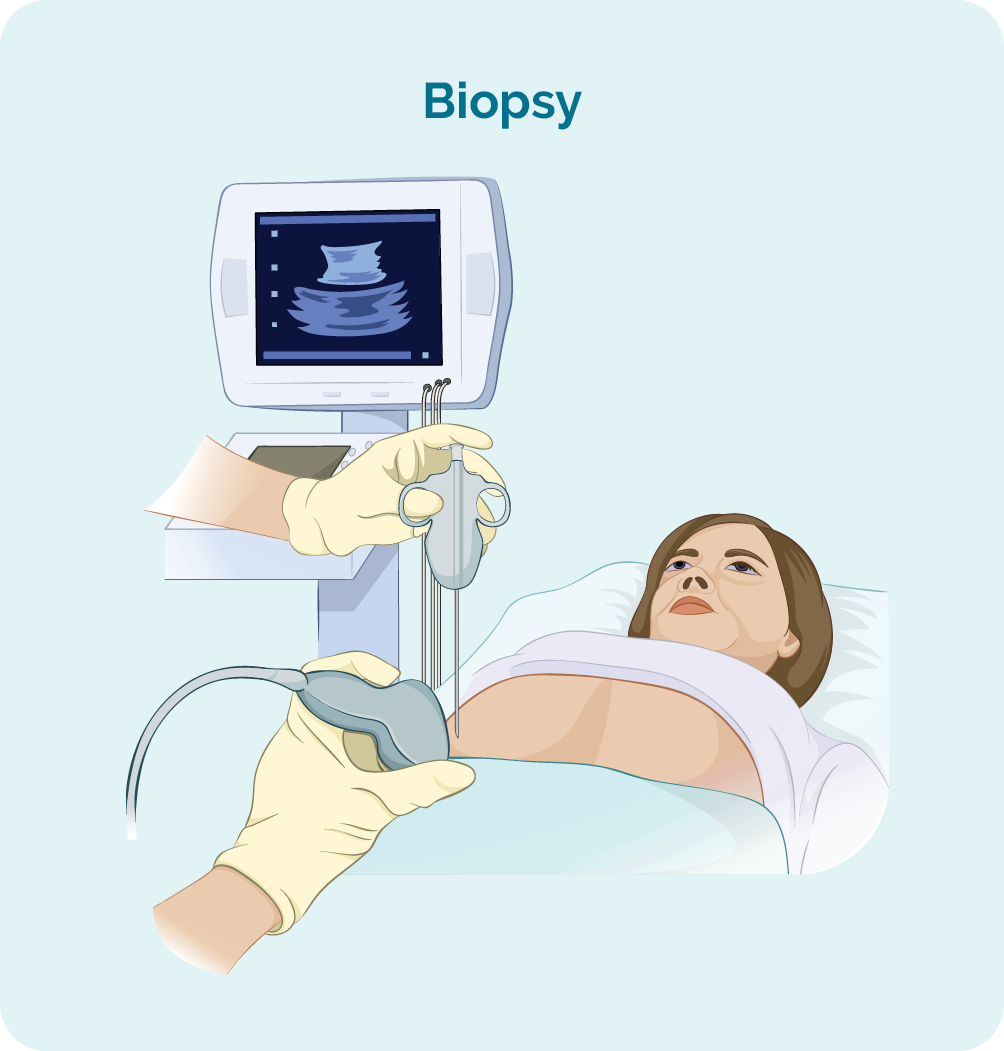
Your doctor may suspect you have lymphoma when they get your blood test results, X-ray or other scan results, or do a physical exam. But to diagnose MZL, you will need a biopsy.
A biopsy is a procedure to remove part, or all of an affected lymph node, tumour or bone marrow. Your bone marrow is the spongy part inside your bones where your blood cells are made. The biopsy is then checked by scientists to see if there are changes that help the doctor diagnose MZL.
When you have a biopsy, you may have a local or general anaesthetic. This will depend on what part of your body the biopsy is taken from.
If you have MZL, your doctor will organise more tests to check if the cancer has spread to other parts of your body. These tests are called “staging” and may include:
- Blood tests
- Positron emission tomography (PET) scan
- Computed tomography (CT) scan
- Bone marrow biopsy (Your doctor will use a needle to take a sample of marrow from the middle of your bone – usually hip, but sometimes the sample may be taken from a different bone. This will be done with local anaesthetic.
- Bronchoscopy – A long thin tube with a camera is passed through your mouth or nose into your lungs so your doctor can see your lungs better, and take biopsies if needed
- Gastroscopy – (endoscopy or colonoscopy) – A long thing tube with a camera is passed down your throat into your stomach, or through your rectum (bottom) into your bowels to look and take biopsies if needed
- Other tests to see how well your kidneys, heart and other organs are working.
Questions for your doctor before you start treatment
- What tests have been done? What tests still need to be done before treatment?
- Can you explain these results to me?
- What treatment will work best for me based on these results?
- What is the intent of this treatment? (e.g., Will you be cured, or go into remission)
- Do I have any other choices?
- What are the best treatments that are available for my type of MZL, even if they’re not available in Australia?
- What are the main, and the worst side effects of this treatment?
- What clinical trials am I eligible for?
- Will I need to have time off work? If yes, can I see a social worker to help me arrange finances?
- What support services are available to help me cope with my diagnosis and learn strategies to avoid stress and talk to my family and friends about my diagnosis and treatment
Additional Questions if you live in rural Australia
11. Can I have my appointments and treatment close to home?
12. Is telehealth an option for me?
13. How long will I need to be away from home for treatment?
14. How often will I need to come to the city (or be away from home)?
15. What financial, accommodation and travel assistance is available to me?
16. Is there a social worker who can help me arrange these things?
If your doctor recommends having radiation treatment you will need to go to appointments every day. If you need help with a place to stay during treatment, please talk to your doctor or nurse about what help is available to you. You can also contact the Cancer Council or Leukemia Foundation in your state and see if they can help with somewhere to stay
Treatment options
Because MZL is generally slow-growing, you may not need treatment. But you will see your specialist doctor regularly. This time can be called ‘Watch and Wait”, but active monitoring is a better description because your doctor will continue to watch how your MZL grows.
Some patients call this “watch and worry”, because it can be uncomfortable not doing anything to fight the cancer. But, watch and wait is a great way to start. It means your own immune system is fighting the cancer and doing a better job keeping it under control than any current treatment could do. Extra medicine that can make you feel quite sick or cause long term side effects, are unlikely to help at this point. Your health will not be improved, and you will not live longer by starting treatment earlier.
Your doctor will consider several things when making choices about your treatment. These include:
- What subtype of MZL you have and if your have or have had infections in the past
- how fast your lymphoma is growing
- how bad your symptoms are
- your age
- your overall health.
Treatments can include:
Antibiotics – Depending on your subtype and stage of MZL you may only need antibiotics. As mentioned above, some infections increase your risk of MZL. By treating the infection, the MZL may also be controlled. Once the infection is gone, it may still take months or several years for the lymphoma to go away completely, but without the infection, your lymphoma may not progress.
Radiation / Radiotherapy – Radiation treatment uses high doses of radiation to kill cancer cells and shrink tumours. Before having radiation, you will have a planning session. This session is important for the radiation therapists to plan how to target the radiation to the lymphoma, and avoid nearby healthy tissue. Radiation therapy usually lasts between 2-4 weeks. During this time, you will need to go to the radiation centre everyday (Monday-Friday) for treatment.
Surgery – An operation to remove the tumour, spleen (splenectomy) or affected lymph node/s.
Chemotherapy (chemo) – These medications might be taken as a tablet at home, or be given as a drip (infusion) into your vein (bloodstream) at a cancer clinic or hospital. Chemo kills fast growing cells so can also affect some of your good cells. You may have one chemo medication or several types of chemo.
Monoclonal Antibody (MAB) – MABs are given as an infusion in a cancer clinic or hospital. MABs attach to the lymphoma cell and attract other disease fighting white blood cells and proteins to the cancer. This helps your own immune system fight the MZL more effectively. Some people may have a MAB and chemo.
Targeted therapy – Targeted therapy is taken as a tablet at home or in hospital. Targeted therapies attach to lymphoma cells and block signals needed for them to grow and produce more lymphoma cells. This stops the cancer from growing, and causes the lymphoma cells to die off.
Stem-cell transplant – if your first treatment did not work, or you’ve had treatment in the past and your MZL has come back, you may be offered a stem cell transplant. Stem cell transplants are only suitable for some patients. Your doctor will be able to talk to you about this. To learn more about stem cell transplants please see out factsheets All factsheets are available on our website here.) If you do not have access to a computer and would like a paper copy, please call us on 1800 953 081 or email us at enquiries@lymphoma.org.au.
Starting treatment
The first time you start treatment it’s called first-line treatment. Once you finish your first-line treatment, you may not need treatment again. For some people, you may need treatment again, but not for weeks, months or even years.
First-line treatment
If you have stage one or two lymphoma and need treatment, you may be offered radiation treatment. Some people will only ever need to have one course of radiotherapy, and will not need any other treatment. Some people may have radiation treatment and chemotherapy. This is called chemo-radiation.
If you have stage 3 or 4 MZL you may need more treatment. This can be a combination of treatments such as chemotherapy and a monoclonal antibody. You may also be eligible for a clinical trial – Ask your doctor if there are any clinical trials you could join
Second-line treatment – first relapse, or refractory disease
Some people will not need treatment again at all. But, if your MZL “flares up again” it is called a relapse. Treatment after a relapse is called second-line treatment (or third-line etc). But some people may not respond to their first line treatment. If your MZL does not respond to the treatment, it is called “refractory” disease. In these cases, you may need to start a different type of treatment. If you have refractory disease, and start a new treatment, this is also called second-line treatment.
Second-line treatments may be a combination of the above – radiation, chemo and monoclonal antibodies, or for some people, a stem cell transplant. You may also be eligible for a clinical trial – Ask your doctor if there are any clinical trials you could join.
Further information on different treatment protocols can be viewed here.
Clinical Trials
Clinical trials are important to find new medicines, or combinations of medicines to improve treatment of MZL in the future. Some targeted therapies are the focus of current clinical trials for MZL. Clinical trials can also offer you a chance to try a new medicine, before it would otherwise be available.
If you are interested in participating in a clinical trial, ask your doctor what clinical trials you are eligible for. You can also read our ‘Understanding Clinical Trials’ Fact Sheet to find a clinical trial.
Follow Up
You will still see your doctor for blood tests and scans after your treatment ends. Your doctor will check you for signs and symptoms of the MZL coming back, and for side-effects you may have from your treatment.
Resources and support
Lymphoma Australia offers a wide variety of resources and support for people with lymphoma and their carers. Please visit our website www.lymphoma.org.au for further information. Lymphoma Australia Fact sheets and booklets include:
- Booklet: What you need to know about lymphoma
- Lymphoma subtypes
- Understanding Clinical Trials
- Emotional impact of a lymphoma diagnosis and treatment
- Fear of cancer recurrence and anxiety
Visit the Lymphoma Australia YouTube Channel for presentations and interviews on a variety of topics about lymphoma subtypes, management and supportive care.
Contact the Lymphoma Nurse Support Line on 1800 953 081, email: nurse@lymphoma.org.au or join the private Facebook group: Lymphoma Down Under.