Learning about your lymphoma can be like learning a new language. It takes time and practice. Please keep this document handy so you can refer back to it as often as you need to. It will become easier to understand the more you read it.
If you’ve been diagnosed with a double or triple hit lymphoma, you have a type of fast-growing cancer of your white blood cells called B-cell lymphocytes (B-cells). Fast growing cancers are called “aggressive”.
Double Hit (DHL) and Triple Hit Lymphoma (THL) are both rare genetic rearrangements (or changes) found in some people with high-grade, aggressive Non-Hodgkin’s Lymphoma (NHL) such as High-grade B-cell Lymphoma and Diffuse Large B-cell Lymphoma.
Understanding your B-cells and DHL/THL
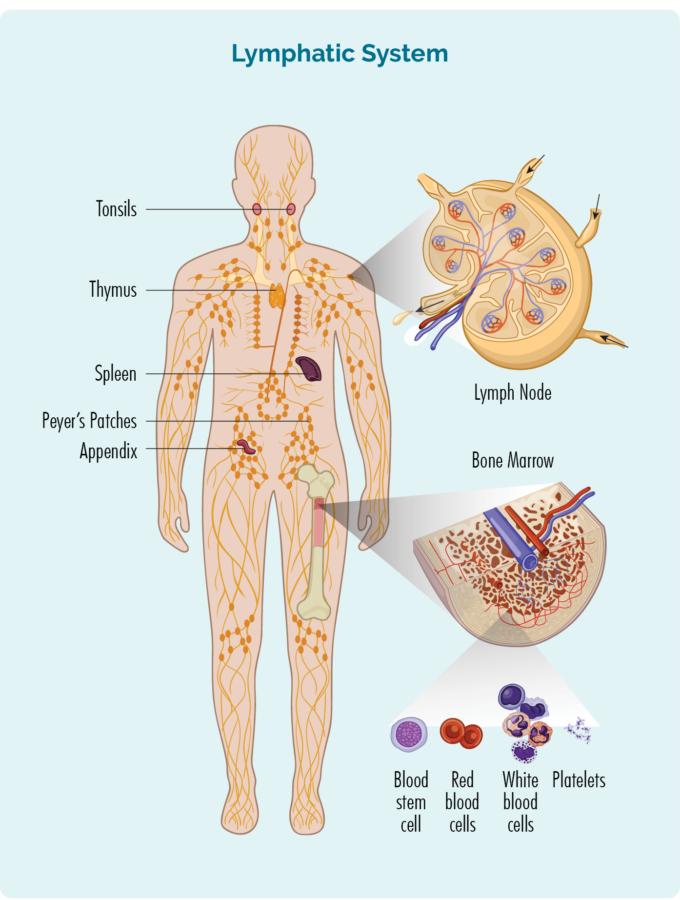
B-cells are made in your bone marrow (the spongy middle part of your bones), before moving into your lymphatic system. They usually live in your lymph nodes and your spleen, but some can also be found in your thymus, blood and other parts of your body.
B-cells are an important part of your immune system and fight infection and diseases to keep you healthy. They remember infections you had in the past, so if you get the same infection again, your immune system can fight it more effectively. The most mature B-cells also make antibodies (immunoglobulins) to help fight infections.
If you have an infection, some of your B-cells move out of your spleen and lymph nodes, to the area where your infection is. This means B-cells can be found in any part of your body. When these cells don’t grow or work properly, and become cancerous you can be diagnosed with lymphoma. You will have cancerous B-cells called lymphoma cells. These cells often group together in your lymph nodes or other parts of your body, causing swollen lymph nodes or tumours to develop.
Cytogenetics of DHL and THL
Cytogenetics are tests on your blood and biopsies that look for changes in your chromosomes or genes. We usually have 23 pairs of chromosomes, and they are numbered according to their size.
On your chromosomes are many genes that tell the proteins and cells in your body how to look or act. If there is a change (variation) in these chromosomes or genes, your proteins and cells may not work properly.
If you have DHL or THL, you have a rearrangement of your genes. This means that some of your genes have rearranged themselves and are no longer in the right place. This rearrangement means your genes are now unable to give proper instructions to your B-cells on how, and when to grow. If you have DHL, you have rearrangements in a gene called MYC and, either your BCL2 or your BCL6 gene (only one of your BCL genes is rearranged in double hit, but you have two total rearrangements with MYC and BCL). If you have THL, you will have rearrangements in all three genes. However, whether you have a DHL or THL, your treatment options will likely be the same.
The MYC and BCL genes are responsible for the development of MYC and BCL proteins that help control the growth and death of cells.
Double Hit verses Triple Hit Lymphoma
It was previously thought that triple hit lymphoma was a tougher lymphoma to treat with worse outcomes than those with double hit lymphoma. However, with more research we are finding that THL is not necessarily any worse than a DHL with a MYC and BCL2 rearrangement. But even more important than these rearrangements are other factors such as any other genetic mutations or changes you might have, and the proteins found on your lymphoma cells.
Some DHL and THL’s may be more difficult to treat or have a higher chance of relapsing after treatment, but this is not necessarily true for all.
DHL/THL versus Double Expressor Lymphoma (DEL)
DHL and THL are not the same as Double Expressor Lymphoma (DEL). If you have DEL, you have a different type of change in your lymphoma cells resulting in too many MYC or BCL proteins (not genes) being on your lymphoma cells, but you may not have a genetic rearrangement. This increased expression of MYC and/or BCL allows cancerous lymphoma cells to keep growing when they shouldn’t.
Although rare, it is possible to have a double or triple hit and double expressor lymphoma. This is where you have the genetic rearrangement, and too many proteins on your lymphoma cells. It is still the one lymphoma, but with different changes that need to be considered by your doctor when planning your treatment.
Like with DHL/THL, some DEL’s may be more difficult to treat or have a higher chance of relapsing after treatment, but this is not necessarily true for all.
Talk to your haematologist or oncologist and ask them to explain your individual changes and what these may mean for your treatment, and chance of being cured from lymphoma.
Signs & Symptoms
Because these subtypes are fast-growing cancers, you may notice a lump that comes up quickly – usually in your neck, armpit or groin. It may or may not be painful, depending on where it is, and if it’s putting pressure on any other parts of your body, like nerves or organs.
Other symptoms you may have are:
- feeling unusually tired (fatigued)
- feeling out of breath or having pain or pressure in your chest
- infections that don’t go away, or keep coming back (recurrent)
- general aches and pains for no obvious reason
- itchy skin or new rashes
- B-symptoms
Diagnosis and Staging
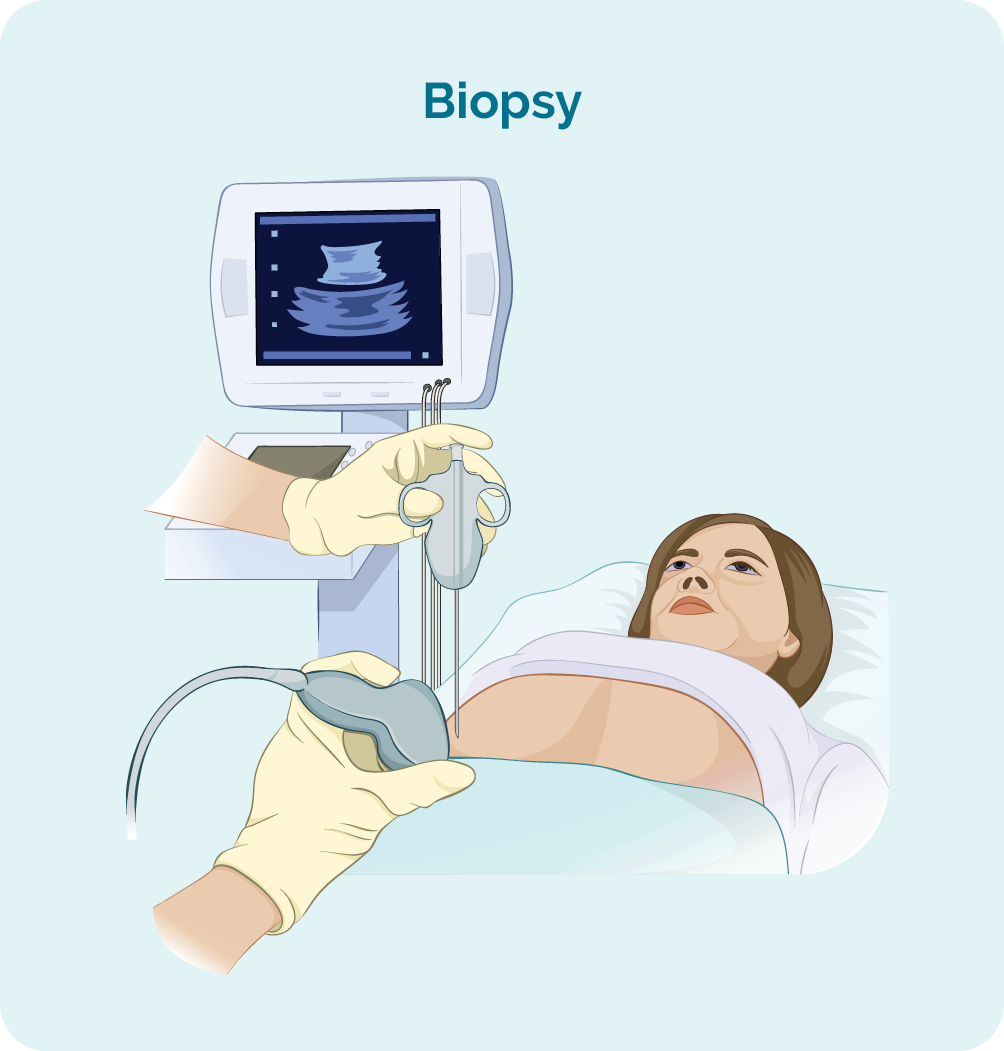
If your doctor suspects you may have lymphoma you will need a biopsy. A biopsy is a procedure to remove part, or all of an affected lymph node or a sample of your bone marrow. The biopsy is then checked by scientists to see if there are changes that help the doctor diagnose lymphoma. When you have a biopsy, you may have a local or general anaesthetic. This will depend on what part of your body the biopsy is taken from.
If you have lymphoma, your doctor will organise more tests to check if it has spread to other parts of your body. These tests are called “staging”. Your DHL or THL stage will depend on where your lymphoma cells are, and how many areas of your body it is in. You might have Stage 1, 2, 3 or 4. Staging tests and may include:
- Positron emission tomography (PET) scan
- Computed tomography (CT) scan
- Lumbar puncture – Your doctor will use a needle to take a sample of fluid from near your spine. This is done if the doctor needs to check if your lymphoma is in your brain or spinal cord
- Echocardiogram – this is an ultrasound to take a picture of your heart and see how well it is working. You may need this if you are going to have certain chemotherapy medications
- Cytogenetic tests – your blood and tumour sample will be checked for genetic variances that may be involved in your disease
As well as the above tests, you may have some extra tests to check how well your body’s organs are working. These may include scans or blood tests to check your lungs, liver, kidney and heart. This is done to make sure it is safe for you to have treatment. Your doctor will also use these tests as a “baseline” to compare future tests to. This helps your doctor to make sure your treatment does not cause too much damage to them.
Once your doctor has all the information they need from your scans, biopsies and other test results, they will be able to make a plan for your treatment.
Before you start treatment
Before you start treatment, you will also need to have some baseline tests done. These can include blood tests to check how well your liver and kidneys are working, scans on your heart, or lung function tests.
Baseline tests are done to make sure that you are well enough to have treatment without it causing you to become too unwell. Throughout your treatment you will have regular blood tests which will be compared to these baseline tests. You may also have further lung tests and heart scans to make sure that the treatment has not caused any damage to your organs.
Questions to ask your doctor
It is important that you ask your doctor any questions you may have before you start treatment. But it can be hard to know what questions to ask. Click here, or scan the QR code at the end of this document to download questions you may like to think about asking your doctor. You can also contact our Lymphoma Care Nurses on 1800 953 081 if you would like to have copy sent to you in the post.
Fertility
Many cancer treatments can make it harder to fall pregnant, or to get somebody pregnant. If you (or your child) are planning to have children later in life, talk to your doctor about how to preserve your fertility
Treatment types
If you have DHL or THL, you will start treatment soon after you are diagnosed. This treatment will be a combination of different medicines. They may include a combination of different treatments. Common types of treatment are outlined below.
Chemotherapy (chemo)
These medicines might be a tablet or given as a drip (infusion) in a cancer clinic or hospital. If you have lymphoma in your central nervous system (CNS) which includes your brain and spinal cord or, if your doctor thinks the lymphoma may spread there, you will also have chemo as an injection into your back. The doctor then delivers chemo into your cerebral spinal fluid (CSF) that surrounds your brain and spine. This is called intrathecal (IT) chemo. Chemo kills fast growing cells, so it can also affect some of your good cells that grow fast too which can cause unwanted side-effects such as hair loss, nausea, diarrhea or changes to your skin.
Monoclonal Antibody (MAB)
Given as an infusion in a cancer clinic or hospital. MABs attach to lymphoma cells and attract other disease fighting white blood cells and proteins to the cancer. This helps your own immune system to fight the lymphoma. It is easy to tell which medicines are monoclonal antibodies because their generic name always ends with “mab”, such as rituximab that works on lymphoma cells with a CD20 protein on them.
Some mabs have a toxic medication attached to them that they take straight to the lymphoma cell, to destroy the lymphoma cell. These are called conjugated mabs. Main side-effects of MABs include flu-like symptoms. Other symptoms will depend on the individual MAB you are given.
Radiation / Radiotherapy
Radiation therapy is a cancer treatment that uses high doses of radiation, to kill cancer cells and shrink tumours. Before having radiation, you will have a planning session. This session is important for the radiation therapists to plan how to target the radiation to the lymphoma, and avoid nearby healthy tissue. Radiation therapy is usually given over 3-5 weeks. During this time, you will need to go to the radiation centre everyday (Monday-Friday) for treatment. Main side-effects are related to the skin over the area of radiation such as redness and blistering like a bad sunburn. You may also have side-effects related to the area of your body having radiation.
High dose chemotherapy followed by a stem-cell transplant
To learn more about stem cell transplants please see our factsheets
- transplants in lymphoma
- allogeneic stem cell transplants
- autologous stem cell transplants
Chimeric antigen receptor therapy (CAR T-cell therapy)
Please see our factsheet for more information on CAR T-cell therapy
All factsheets are available on our website at https://www.lymphoma. org.au/support-for-you/fact-sheets/ If you do not have access to a computer and would like a paper copy, please call us on 1800 953 081 or email us at enquiries@lymphoma. org.au
Clinical trial
These may include targeted therapies and other treatments. Ask your doctor if you are eligible for any clinical trials.
Common treatment protocols
The first time you start treatment for lymphoma it’s called first-line treatment. Sometimes lymphoma may not go away with first-line treatment . If this happens, it is called “refractory” disease. For some people, the lymphoma may go away for a while, and then come back. This is a “relapse”. If you have refractory or relapsed lymphoma you will be offered a different type of treatment. This next treatment will be second-line treatment.
First-line treatment
You will need to start soon after diagnosis. The some of the more common first line treatments for lymphomas with DHL and THL mutations may include one of the following protocols:
- R-CHOP – combination of chemotherapy and a monoclonal antibody
- DA-EPOCH-R – combination of chemotherapy and a monoclonal antibody.
- Hyper CVAD – combination of chemotherapy and a monoclonal antibody.
- R- CODOX-M – combination of chemotherapy and a monoclonal antibody.
- Radiotherapy – if you have earlystage disease you may have radiation treatment
- Intrathecal chemo – Your doctor will consider this if you have lymphoma in your CNS, or are at risk of having it spread there
- Autologous stem cell transplant – this may be offered if you are in remission after your first-line treatment. The aim is to strengthen (or consolidate) the response you had to initial chemotherapy. The aim of this is to increase the chance of curing you from lymphoma. That is, making the lymphoma go away forever.
- You may also be able to join a clinical trial
For more information on treatment protocols please see https://www.eviq.org. au/patients-and-carers/anticancer-drugtreatments/lymphoma.
Second and subsequent lines of treatment
If your doctor thinks you have relapsed, or that you have refractory disease, you will need another biopsy. This will be similar to what you had before you started treatment the first time.
If you have relapsed or refractory disease you may be offered one of the below treatment types:
- Salvage chemotherapy with ICE-R – a combination of different chemotherapies and a monoclonal antibody.
- Autologous stem cell transplant (AuSCT)
- Bendamustine with polatuzumab vedotin and rituximab – a chemotherapy with a conjugated monoclonal antibody and CD20 targeting monoclonal antibody. You may be offered this if you cannot have a stem-cell transplant.
- Chimeric antigen receptor (CAR) T-cell Therapy (as a third or fourth-line of treatment)
- Combination of other chemotherapy
- Clinical trial participation
More information on treatment options can be found on our website here https:// www.lymphoma.org.au/about-lymphoma/ treatments/
Clinical trials
Clinical trials are important to find new medicines, or combinations of medicines, to improve treatment for people with double and triple hit, as well as double expressor lymphomas in the future. They may also offer you a chance to try a new medicine, or treatment before it would otherwise be available. If you are interested in participating in a clinical trial, ask your doctor what clinical trials you are eligible for. You can also read our ‘Understanding Clinical Trials’ fact sheet for websites to find a clinical trial; https://engonetlymaus.blob.core. windows.net/assets/uploads/files/Fact%20 Sheets/LYA084_CT_FactSheet_FA(web).pdf
Follow up after treatment ends
Finishing treatment can be a time of mixed emotions. You may feel relieved and excited, or you may feel worried and scared. You may even alternate between all of these emotions. This is very normal. However, you will not be alone. You will continue to see your specialist team on a regular basis, and be checked for any signs and symptoms of your lymphoma relapsing, and your doctor will also want to make sure you’re not having any side effects from your treatment.
Your doctor will let you know how often they want to see you, however the longer time you are in remission the less often they will need to see you. If you have any concerns or worries, please contact your healthcare team or contact our lymphoma care nurses on 1800 953 081. You can also email us on nurse@lymphoma.org.au
Summary
- Double and triple hit lymphomas refer to genetic rearrangement that may impact the way your lymphoma grows and responds to treatment.
- Double expressor lymphomas do not have a genetic rearrangement, but have extra proteins on the lymphoma cells that can make them more difficult to treat.
- Some double and triple hit and double expressor lymphomas may be more difficult to treat, or if they respond well to treatment may relapse.
- Triple hit is not necessarily worse than double hit lymphoma with a MYC and BCL2 rearrangement.
- Many other factors impact how your lymphoma will respond to treatment, including other genetic changes you may have, or the proteins found on your lymphoma cells.
- There are many treatment options for DHL and THL and your doctor will consider all these things to come up with the best treatment plan for your individual circumstance.
- Talk to your doctor about your individual genetic changes and how these may impact your treatment options and outcomes.
- You are not alone. You can call and speak to one of Lymphoma Care Nurses on 1800 953 081.
Useful links
Questions to ask your doctor
Definitions
DLBCL
Treatments
What is Lymphoma
Resources and Support
Lymphoma Australia offers a wide range of resources and support for people living with lymphoma or CLL, and their carers. How to access our resources:
- Visit our website www.lymphoma.org.au for more information.
- Phone our Lymphoma Care Nurse Hotline on 1800 953 081.
- Email our Lymphoma Care Nurses nurse@lymphoma.org.au
- Booklet: Understanding Non-Hodgkin Lymphoma (NHL)
- Downloadable information: Visit our website, or give us a call if you would like some more information on a variety topics related to lymphoma
- Join our Facebook page Lymphoma Down Under (make sure you complete all the membership questions when you join).
Cancer Council offers a range of services, including free counselling, to support people affected by cancer, including patients, families and friends. Services may be different depending on where you live. You can contact them at www.cancer.org.au or by phone on 13 11 20.
Medicare Australia: Check with your GP if you are eligible for a Mental Health Treatment Plan (MHTP). This plan is funded by Medicare and can provide you with up to 10 sessions with a registered psychologist. More information can be found here.
WeCan is an Australian supportive care website to help find the information, resources and support services you may need following a diagnosis of cancer. You can visit their website at www.wecan.org.au.
Canteen provides support for young people aged 12-25 years who have cancer, or, who have a parent with cancer. Find out more at their website here www.canteen.org.au.
Disclaimer: Lymphoma Australia has taken every precaution to make sure the information in this document is accurate and up-to-date. However, this information is intended for educational purposes only and does not substitute for medical advice. If you have any concerns about your health or wellbeing, please contact your treating team.