Learning about your lymphoma can be like learning a new language. It takes time and practice. Please keep this document handy so you can refer back to it as often as you need to. It will become easier to understand the more you read it.
Lymphoma and its treatments can affect your immune system, making it harder for you to fight infections. Vaccinations can help protect you, but you need to know which ones are safe, and when to get them.
This factsheet answers frequently asked questions about vaccines and lymphoma, and provides information on where to get more information.
Why does Lymphoma affect my immune system?
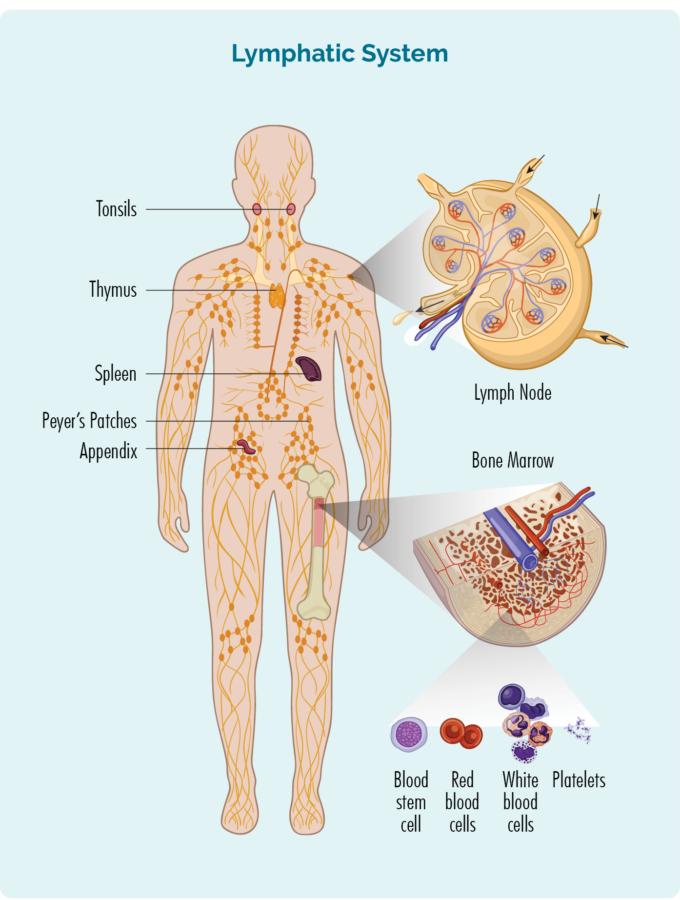
Lymphoma is a cancer of the white blood cells called lymphocytes that live in our lymphatic system, and is part of our immune system. Some types of lymphoma can weaken your body’s ability to fight infections.
The treatments you might receive, like chemotherapy, immunotherapy, steroids, or a stem cell transplant, can also lower your immunity. This means you may be more likely to catch infections and take longer to recover.
Is it safe to have vaccinations while I have Lymphoma?
Yes, but not all vaccinations are safe for you. The Australian Government – Department of Health & Aged Care have published the Australian Immunisation Handbook which they update regularly.
This handbook advises that Non-live vaccines are generally considered safe, but Live Vaccines are NOT considered safe for people with a weakened immune system. As such, people with lymphoma should not have LIVE vaccines.
The right vaccines for you will depend on:
- The type of lymphoma you have.
- Whether you’re having treatment, on watch and wait, or in remission.
- How strong your immune system is.
Live vaccines, like the measles, mumps, and rubella [MMR] vaccine, contain a weakened form of a virus. These live vaccines are NOT safe if your immune system is weak. Non-live vaccines (like the flu, whooping cough & Shingrex vaccines) are generally considered safer and recommended.
Will Vaccines Work for Me If I Have Lymphoma?
Vaccines may not work as well if your immune system is weak. If you’re having chemotherapy, immunotherapy, or other treatments, your body may not respond as strongly to vaccines. This means you might not get full protection from infections.
Because of this, your doctor may recommend:
- Extra doses or booster shots to help build better immunity.
- Delaying some vaccines until after your treatment.
- Vaccinating people around you (like family members and carers) to help protect you from infections (this is called “herd protection”).
Even if a vaccine isn’t as effective, it may still provide some protection. Talk to your doctor about the benefits of having the recommended vaccines and when it’s safe for you.
How Can I Check What Vaccinations I’ve Already Had?
You can check your vaccination history on the:
- Medicare app or your My Health Record online.
- Australian Immunisation Register (AIR) by calling 1800 653 809.
For more details on accessing vaccination records, you can scan the QR code or visit the Australian Government’s Digital Health website:
Australian Immunisation Register – Services Australia – https://www.servicesaustralia.gov.au/australianimmunisation-register
Live vaccines (NOT safe if you have a weakened immune system) include:
- MMR (measles, mumps, rubella)
- Varicella (chickenpox)
- Rotavirus
- Yellow fever
- BCG (tuberculosis)
- Zostavax (for shingles)
Non-live vaccines (Generally considered safe, but you must check with your doctor)
- Flu vaccine (annual)
- Pneumococcal vaccine (protects against pneumonia)
- Whooping cough (pertussis)
- COVID-19 vaccine
- Hepatitis B
- Tetanus and diphtheria
- Respiratory Syncytial Virus (RSV)
- Meningococcal vaccines – ACWY and B.
- Shingrix (protects against shingles)
All medicine, including vaccinations have the potential to cause unwanted side-effects or allergic reactions. These are usually mild and temporary, but in rare cases can be more severe. Ask your doctor to explain the risks of side-effects and allergies, and how to manage them before taking any new medicine or vaccine.
Vaccinations After Stem Cell Therapy
If you’ve had a stem cell transplant, your immune system is like it was when you were a newborn baby. You will be advised to get vaccinated again, including all the vaccinations you had as a child. Your doctor will give you a vaccination schedule to follow, and these usually start about 6 months to a year after your stem cell transplant.
You can find information on recommendations for vaccination after Stem Cell therapy by scanning the QR code or clicking this link:
Vaccinations After CAR T-Cell Therapy
CAR T-cell therapy affects your immune system differently. You may lose some of your previous immunity, but it won’t be gone completely. You might need booster vaccines but will not need to have all your childhood vaccines again. There is no special vaccine schedule recommended after CAR T-cell therapy.
Ask your doctor if you need boosters, and when you should start getting general vaccines again (like flu, Shingrex and COVID).
What Can I Do If I Keep Getting Infections?
- Wash your hands often.
- Stay away from people who are sick.
- Get the recommended non-live vaccines.
- Wear a mask in crowded places.
- Talk to your doctor about extra treatments to help boost your immunity. These may include antibiotics, antifungal, antiviral medicines, or immunoglobulins (antibody treatments).
Who Should I Talk to About Vaccinations
Always check with your:
- Haematologist or oncologist.
- GP (General Practitioner).
- Immunisation nurse or pharmacist.
- They can help you make a vaccination plan that keeps you safe.
Where can I get more information?
You can find more information on what vaccines are recommended for people with a weakened immune system by clicking here, or scanning the below QR code. You can also call our Lymphoma Care Nurses Monday – Friday 9am – 4:30pm Eastern States Time, on 1800 953 081 or email them at nurse@lymphoma.org.au.
Takeaway
Vaccinations can help protect you, but you need to be careful about which ones you get, and when you have them. Always check with your doctor before getting any vaccine.
Summary: Vaccinations and Lymphoma
Having lymphoma or receiving treatment can weaken your immune system, making it harder to fight infections. Vaccinations may help protect you, but some may not be safe, or as effective during treatment.
- Live vaccines are NOT safe if your immune system is weak.
- Non-live vaccines are generally considered safe and recommended but may not work as well if you’re having treatment. Check with your doctor before having these.
- You may need extra doses or booster shots to improve protection.
- If you have a stem cell transplant you will be advised to have all your childhood vaccinations again.
- You may need booster shots after chemotherapy, CAR T-cell therapy and other lymphoma treatments.
- If you keep getting infections, you can take steps like washing your hands, avoiding sick people, and talking to your doctor about extra protection.
- Always check with your haematologist, GP, or immunisation nurse before getting any vaccine.
Even if vaccines don’t work as well for you, they may still provide some protection. It’s important to get the right vaccines at the right time to stay as healthy as possible.
Resources and support
Lymphoma Australia offers a wide range of resources and support for people living with lymphoma or CLL, and their carers. How to access our resources:
- Visit our website www.lymphoma.org.au for more information.
- Phone our Lymphoma Care Nurse Hotline on 1800 953 081.
- Email our Lymphoma Care Nurses nurse@lymphoma.org.au
- Booklet: Understanding Non-Hodgkin Lymphoma (NHL)
- Downloadable information: Visit our website, or give us a call if you would like some more information on a variety topics related to lymphoma
- Join our Facebook page Lymphoma Down Under (make sure you complete all the membership questions when you join).
Cancer Council offers a range of services, including free counselling, to support people affected by cancer, including patients, families and friends. Services may be different depending on where you live. You can contact them at www.cancer.org.au or by phone on 13 11 20.
Medicare Australia: Check with your GP if you are eligible for a Mental Health Treatment Plan (MHTP). This plan is funded by Medicare and can provide you with up to 10 sessions with a registered psychologist. More information can be found here.
WeCan is an Australian supportive care website to help find the information, resources and support services you may need following a diagnosis of cancer. You can visit their website at www.wecan.org.au.
Canteen provides support for young people aged 12-25 years who have cancer, or, who have a parent with cancer. Find out more at their website here at www.canteen.org.au.
Disclaimer: Lymphoma Australia has taken every precaution to make sure the information in this document is accurate and up-to-date. However, this information is intended for educational purposes only and does not substitute for medical advice. If you have any concerns about your health or wellbeing, please contact your treating team.