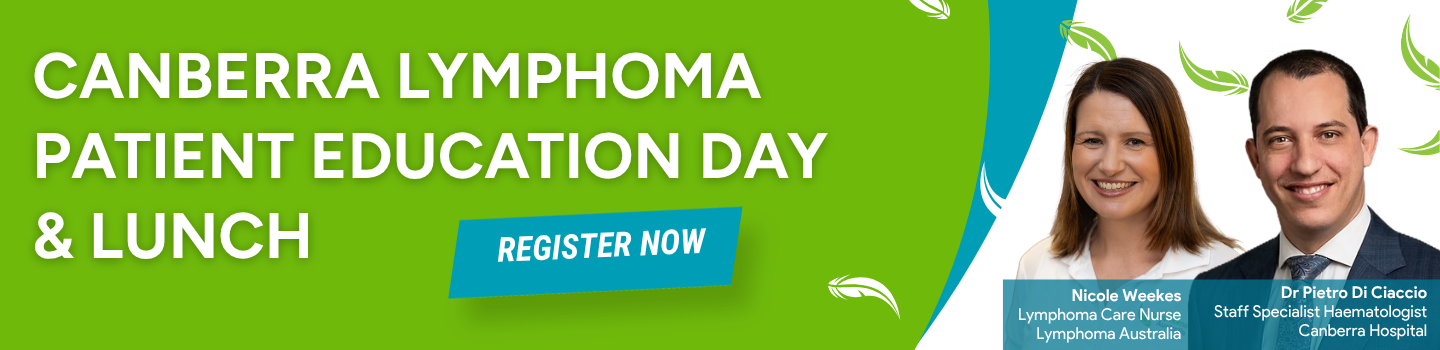
We are excited to invite you to our upcoming In-Person Patient Education Day in Canberra this July.
This education day will include the following topics:
- Discussing the changing landscape of treating lymphoma and CLL
- Supportive care after Lymphoma Treatment: Practical strategies for recovery and wellbeing.
Guest Speakers
Dr Pietro Di Ciaccio, Staff Haematologist, The Canberra Hospital
Dr Pietro Di Ciaccio is a specialist haematologist, with fellowships from both the Royal Australasian College of Physicians and Royal College of Pathologists Australasia. He specialises in all varieties of malignant, non-malignant and obstetric haematology, with particular interest in lymphoma.
Dr Di Ciaccio cares for patients at The Canberra Hospital in the Australian Capital Territory. He also has a monthly clinic in Goulburn in the southern highlands of regional New South Wales.
In addition to clinical haematology, Dr Di Ciaccio also works as a haematopathologist at Capital Pathology (Sonic Healthcare), and is a lecturer at the Australian National University. He is the current Chair of the Australasian Lymphoma Alliance (ALA).
Dr Di Ciaccio has expertise in health medicine and is a Fellow of the Australasian College of Legal Medicine. He speaks Italian, and prior to a career in medicine completed degrees in Arts and Law.
Nicole Weekes, Lymphoma Care Nurse, Lymphoma Australia
Nicole Weekes is a Lead Lymphoma Care Nurse working across Lymphoma Australia and South Western Sydney Local Health District. She has over 15 years of haematology nursing experience and holds a Master’s degree in Cancer and Haematology Nursing.
Nicole is recognised for delivering advanced, patient‑centred care across the full haematology continuum, from diagnosis through to survivorship. She coordinates complex treatments and supports patients to achieve their best possible outcomes.
Known for her compassionate approach, Nicole offers kind, consistent emotional support to patients and their families during what is often a highly challenging time, ensuring they feel informed, supported, and empowered throughout their journey.
Agenda
| Arrival | 10am | Registrations |
| Presentation 1 | 10:15am – 11:00am | The changing landscape of treating Lymphoma and CLL – Dr Pietro Di Ciaccio |
| Presentation 2 | 11:15am – 12:00pm | Supportive care after Lymphoma treatment: Practical strategies for recovery and wellbeing – Nicole Weekes |
| Lunch | 12:00pm – 1:00pm | Complimentary lunch, providing time for attendees to meet and connect with fellow patients. |
| Close | 1:00pm | Wrap Up and Close |