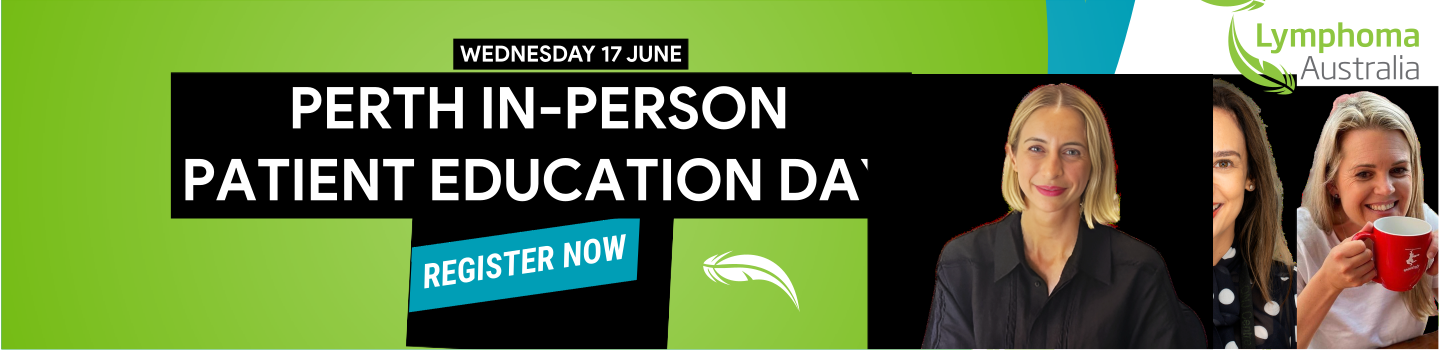
We are excited to invite you to our upcoming In-Person Patient Education Day in Perth this June.
This education day will include the following topics:
- Harnessing the Immune System: The Future of Lymphoma Therapy
- Surveillance and Life After Treatment
- The Role of Exercise in Survivorship
Guest Speakers
Dr Allison Barraclough
Lymphoma Lead and CAR-T Program Director at Fiona Stanley Hospital, Perth WA. Dr Barraclough has a special interest in immunological treatments for lymphoma and in supporting patients in rural and remote areas living with haematological malignancies.
Helena graduated from Curtin University in 2009 and began her career in haematology at Royal Perth Hospital in 2010. Since then she has immersed herself in all aspects of malignant haematology and followed the state stem cell transplant service to Fiona Stanley Hospital in 2015. In 2020. Helena transitioned to Sir Charles Gairdner Hospital to establish the Lymphoma Clinical Nurse Consultant position and has been hooked on lymphoma ever since. After earning her Master’s Degree from Monash University in 2023, Helena has progressed to the role of Lymphoma Nurse Practitioner and is passionate about providing clinical expertise to individuals living with lymphoma.
Dr Claire Munsie is a Lecturer in Clinical Exercise Physiology at Curtin University and an Accredited Exercise Physiologist with the WA Youth Cancer Service. She has over 15 years of clinical experience, including the past decade working with young people aged 15 to 25 years during and after cancer treatment. Her clinical work delivers individualised exercise interventions to manage treatment side effects and support recovery within multidisciplinary care.
Agenda
| Arrival | 12pm | Registrations |
| Presentation 1 | 12:15pm – 1:00pm | Harnessing the Immune System: The Future of Lymphoma Therapy – Dr Allison Barraclough, Haematologist |
| Presentation 2 | 1:00pm – 1:45pm | Surveillance and Life After Treatment – Helena Furdas, Lymphoma Nurse Practictioner |
| Break | 1:45pm – 2:15pm | Light Refreshments |
| Presentation 3 | 2:15pm – 2:45pm | The Role of Exercise in Survivorship – Claire Munsie, Senior Exercise Physiologist |
| Close | 2:45pm – 3:00pm | Wrap Up and Close |