OVERVIEW
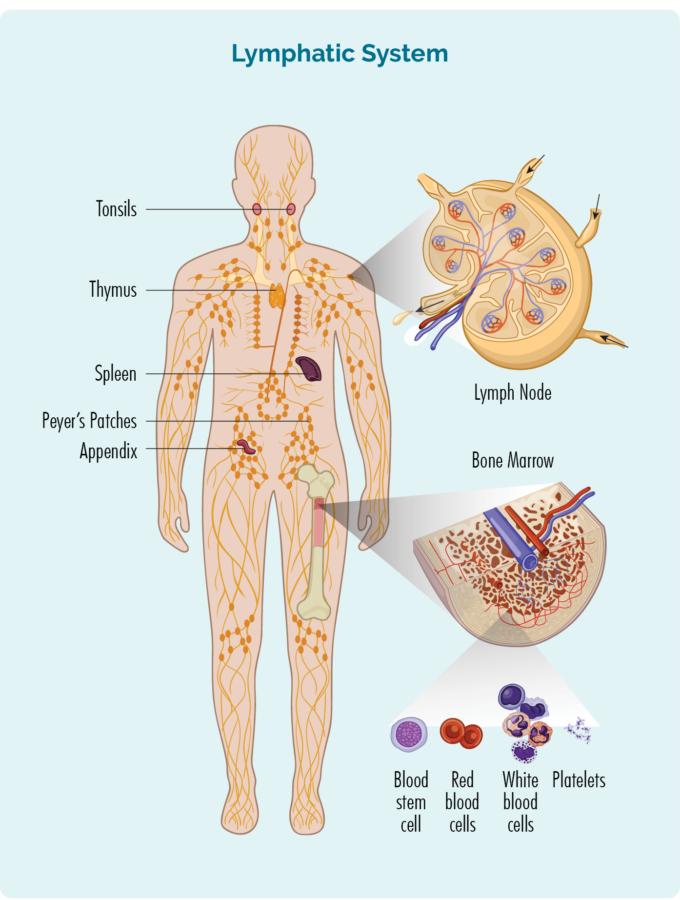
Allogeneic stem cell transplants are a type of treatment that some patients can receive for their subtype of lymphoma. These transplants utilise stem cells that are collected from a donor’s blood stream, bone marrow or cord blood donation. They are used to repopulate a patient’s bone marrow after high dose of chemotherapy treatment and aims to remove any traces of lymphoma in the body. A stem cell is an immature blood cell that is born in the bone marrow and grows into the mature red cells, white cells and platelets that are spilled out into the blood stream.
INDICATIONS FOR ALLOGENEIC STEM CELL TRANSPLANT
Allogeneic stem cell transplants are used for many different subtypes of lymphoma and your specialist will consider many other factors including your age, general health, medical history, stage of lymphoma and response to previous treatments. Allogeneic transplants may be used in a number of circumstances, but most commonly in patients who have lymphoma that has relapsed more than once. Often these patients have had an autologous transplant previously. In certain rare circumstances, an allogeneic transplant can also be used as part of the intitial therapy, or as part of treatment for the first relapse.
TYPES OF ALLOGENEIC STEM CELL TRANSPLANTS
An allogeneic stem cell transplant uses a donor’s stem cells such as a sibling (brother or sister) known as a matched related donor (MRD) or a donor from one of the bone marrow or cord blood donor registries around the world known as a matched unrelated donor (MUD). Where no matched donors are available, it is possible that a partially matched donor (eg. sibling, parent) could be used. There are three different ways you can collect stem cells from donors and the most common is by collecting them from the blood stream after giving the donor injections of a growth factor hormone. Donor stem cells can also be harvested directly from a donor’s bone marrow or by donation of umbilical cord stem cells at a baby’s birth.
PREPERATION FOR AN ALLOGENEIC STEM CELL TRANSPLANT
Allogeneic stem cell transplants are quite complex to plan and deliver and you will be referred to a transplant specialist who may not be your current specialist to oversee the transplant process. The first step is finding a donor. This is done by conducting human leukocyte antigen (HLA) typing which is a simple test done on either blood or saliva samples from potential donors looking for these HLA proteins on the surface of their cells. The results of the HLA typing tests are then compared to the patients to see whether they match or not. The most likely HLA match for a patient is their siblings and if these are not a match or they do not have any siblings then an unrelated donor search is initiated through the international donor registry. The best chance for HLA matching occurs when the donor and patient have the same or similar ethnic background.
The transplant specialist and their team will book the patient in for education sessions and pre transplant work up including testing of your major organ functions to ensure there are no issues prior to undergoing an allogeneic stem cell transplant. The pre transplant work up will also require a review of where the patient’s lymphoma is located and the preference for any allogeneic stem cell transplant as mentioned previously is that the patient’s lymphoma is in a complete remission meaning there are no signs of the lymphoma in the body.
ALLOGENEIC STEM CELL TRANSPLANTATION PROCESS
There are four major steps in the process of an allogeneic stem cell transplant:
- Collection of stem cells: as discussed above the stem cells will be collected from the donor. The most common source of stem cells is from the blood stream and these are collected by an apheresis machine. As stem cells normally live in the bone marrow the donor has to receive injections of growth factor hormone to mobilise the stem cells into the blood stream for collection. The apheresis machine is able to draw whole blood into the machine, spin it through a centrifuge to separate the components of the blood and collect the layer that contains the stem cells all while reinfusing the rest of the blood back to the donor on the machine. Bone marrow donation requires the donor to undergo a surgical procedure under anaesthetic to harvest the stem cells directly from the liquid bone marrow in their pelvic bones. Cord blood donation is from the public cord bank where a donation of stem cells from the blood left behind in the umbilical cord and placenta after a baby is born has been donated and stored
- Processing and storage of stem cells: stem cells collected from a donor’s blood stream or bone marrow are often collected fresh before use for the allogeneic transplant, but may also be preserved and frozen before use. Cord blood donations have been stored in the public cord blood bank and will be retrieved from their storage and transported to the transplant hospital prior to transplant.
- Administration of the transplant conditioning regime: the patient is admitted to hospital (note that some hospitals may do this step by visiting the day centre each day instead) to receive the conditioning regime which involves administration of high dose chemotherapy aiming to destroy any residual lymphoma cells and clear the patient’s bone marrow of stem cells ready for transplant of the donor stem cells. Depending on what type of transplant you receive you may be in hospital for three to six weeks depending on your progress and recovery
- Reinfusing stem cells: once the high dose chemotherapy has cleared the patient’s bone marrow the donor stem cells are reinfused into the blood stream. Your nurse or special laboratory scientist will bring the stem cells to your bedside, so they are ready to reinfuse back to you. The body recognises that these stem cells are not mature cells and sends them back into the bone marrow for maturing into red cells, white cells and platelets. Once these stem cells have matured, they are spilled into the blood stream and the patient’s blood counts start to normalise.
After having the stem cells reinfused the patient remains in hospital for their counts to begin to normalise and to manage any infections and side effects as a result of the transplant. The risk of developing a severe or potentially life-threatening complication of the transplant is highest whilst the patient’s blood counts are extremely low. This risk becomes less as the new stem cells mature and replenish the blood stream and increase the ability for the patient’s own immune system to fight off any infections. This process is faster with an autologous transplant than an allogeneic transplant.
During the first month following a transplant, the transplanted stem cells will start to grow in the patient’s bone marrow and produce a steady stream of healthy new red cells, white cells and platelets that can then repopulate and circulate in the patient’s blood stream. This process if referred to as engraftment. Frequent blood tests will be performed to monitor this process and complete recovery from an immune function may takes several months for autologous transplant patients and up to 2 years for allogeneic transplant patients. It is very important for patients to take precautions to avoid exposure to infections including diligent hand washing, avoiding close prolonged contact with anyone who is unwell, avoiding crowds, fresh flowers and gardening and not sleeping with pets just to name a few. Your specialist and their team will go through recommendations for you after your transplant.
SIDE EFFECTS OF ALLOGENEIC STEM CELL TRANSPLANTATION
After high dose chemotherapy the blood cell counts are extremely low. This substantially increases the risk of getting a fever, infection, and having a bleeding complication. Also as the dose of chemotherapy is higher than usual the risk of side effects such as nausea, vomiting, diarrhoea, fatigue, mouth sores and loss of appetite may be more intense and is another reason why the patient remains in hospital during this time to be closely monitored and managed for these potential side effects. Potential long-term side effects will also be monitored for in the clinic including potential infertility, early menopause, damage to thyroid gland function, cataracts, lung, heart and bone tissue.
One of the benefits of allogeneic transplant is that after the donated stem cells fully engraft to the patient’s bone marrow (typically a few months later) they begin to function as part of the patient’s immune system and may attack any remaining lymphoma cells. This benefit is called the Graft Versus Lymphoma (GVL) effect. One of the complications of allogeneic transplant is that in some cases the donors stem cells may start to attack the patient’s healthy cells. This complication is called Graft Versus Host Disease (GVHD). GVHD can be mild to severe in nature affecting different organs in the body. GVHD can usually be monitored and treated with ongoing medications to supress the immune cells from attacking the patient’s organs. Mild cases can be managed whilst the patient is being followed up in the clinic however more advanced cases will require rehospitalisation at the time for management and treatment.
FOLLOW UP
Once a transplant is completed, people with lymphoma need to be followed up closely by their specialist with regular appointments to monitor:
- Evaluate the effectiveness of the transplant
- Ongoing transplant side effects
- Recovery from transplant
- Signs of lymphoma relapsing
- Revaccination for diseases after losing the immunity of diseases you were vaccinated for as a child such as measle, mumps, rubella and polio to name a few
- Potential late effects caused by the transplant that can occur months or years later, that can be based on the duration and frequency of transplant and prior treatments, age, gender and overall health of each person
Depending on the type of transplant you have received and your tolerance to this transplant you may need to relocate closer to the hospital for a certain period of time shortly after discharge from the hospital as your home may be far from specialist care if required. There are many supports in place for patients and their carers that require to relocate for a certain period of time so just ask your specialist to refer you to speak to your hospital’s Social Worker or Nurse Specialist to help work through these supports and refer you to the organisations that can assist during this time.
Lymphoma Australia offers a wide variety of resources and support for people with lymphoma and their carers. Please visit our website www.lymphoma.org.au for further information.
Cutaneous Lymphoma Foundation (USA), promote awareness and education for those affected. For more information please visit their website www.clfoundation.org
SOME QUESTIONS TO ASK YOUR DOCTOR
- Am I a candidate for an allogeneic stem cell transplant?
- How do we test my siblings to see if they are a potential donor for a transplant?
- If my siblings are not a match, what other donor options do I have?
- Once an allogeneic stem cell transplant is planned how long would I be in hospital for?
- What is the follow up required after the allogeneic stem cell transplant?