Learning about your lymphoma can be like learning a new language. It takes time and practice. Please keep this document handy so you can refer back to it as often as you need to. It will become easier to understand the more you read it.
Introduction
Primary Central Nervous System Lymphoma (PCNSL) is an aggressive subtype of Non-Hodgkin Lymphoma (NHL) that can affect children and adults. It is more common though in older adults, or people with a weakened immune system.
Fast growing cancers are sometimes called “aggressive”. But even though this is an aggressive blood cancer, it usually responds well to treatment.
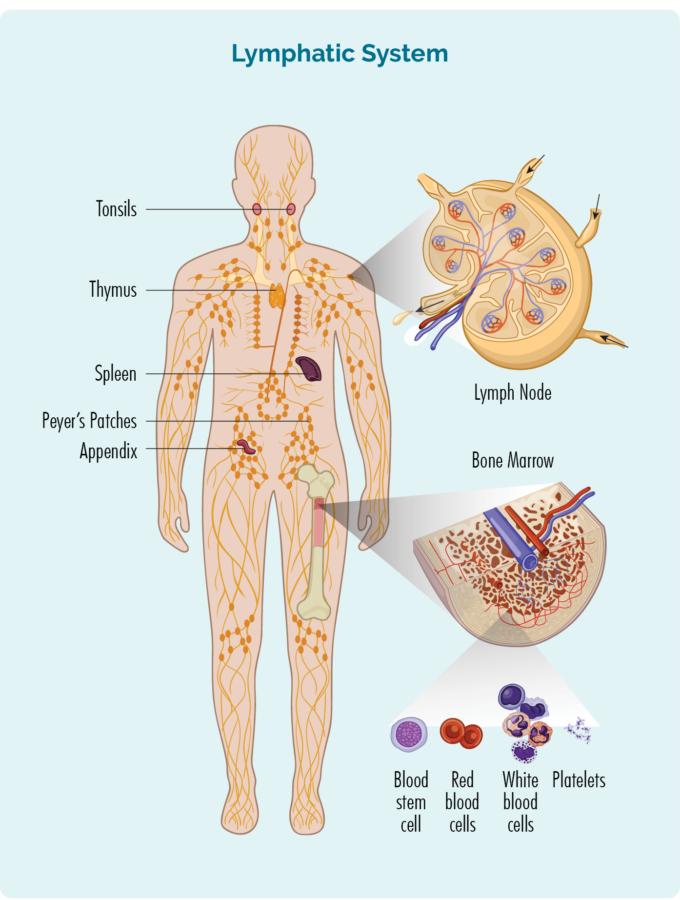
PCNSL affects a type of white blood cell called B-cell lymphocytes (B-cells). These cells are made in your bone marrow (the spongy middle part of your bones), before moving into your lymphatic system. They usually live in your lymph nodes or your spleen. Some also live in your thymus and blood.
B-cells fight infection and diseases to keep you healthy. They remember infections you had in the past so, if you get the same infection again, your immune system can fight it more effectively. When you have an infection, some of your B-cells move out of your spleen and lymph nodes, through the lymphatic system and to the area where your infection is. This means B-cells can be found in any part of your body.
When these cells don’t grow or work properly, you can be diagnosed with lymphoma. You will have cancerous B-cells called lymphoma cells. With PCNSL the cancerous lymphocytes are found in your central nervous system which includes your brain, spinal cord, eyes, cranial nerves and a protective layer of tissue that covers your brain and spinal cord called meninges.
Some people have lymphoma outside of the central nervous system (CNS) and then it spreads to areas within the CNS. This is called secondary central nervous system lymphoma. It is not the same as PCNSL and it is treated differently.
Signs & Symptoms
Because PCNSL affects your central nervous system, symptoms you experience will be related to the organs that make up this system. These can include:
- Headaches and/or changes to your vision
- Confusion or memory changes
- Changes in your mood or personality
- Seizures
- Vomiting
- Difficulty going to the toilet
- Weakness, numbness or tingling feelings.
Additionally you may experience other symptoms that are common in many types of lymphoma such as:
- feeling unusually tired (fatigued)
- feeling out of breath
- bruising or bleeding more easily than usual
- infections that don’t go away, or keep coming back (recurrent)
- sweating at night more than usual
- losing your appetite (not wanting to eat)
- losing weight without trying
- itchy skin.
Diagnosis, Staging and Grading
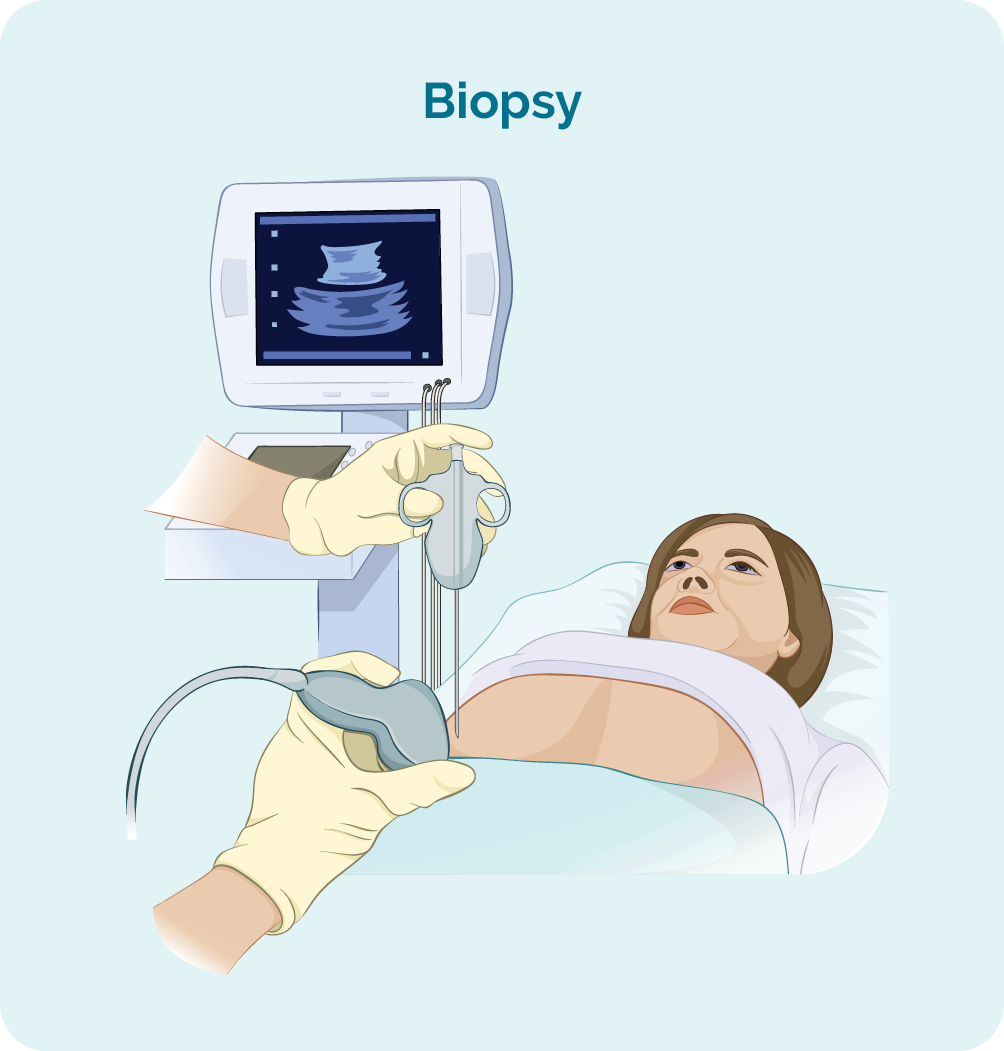
If your doctor suspects you may have lymphoma, they will recommend you have a biopsy. This is the only way they will be able to tell for sure if you have PCNSL. You will have a general anaesthetic when you have the biopsy. During the biopsy a small part of the affected area, or an entire lymph node may be removed. It will then be looked at by a pathologist under a microscope.
If the lymphoma is only in your brain, a neurosurgeon (a specialist in diagnosing and treating problems with the CNS) will take a brain biopsy. You will have a CT scan during the biopsy which helps guide the biopsy needle to the right area. This is called a ‘stereotactic biopsy’. You will have a general anaesthetic for this biopsy, as it’s important to stay very still.
If there is lymphoma in your spine, a specialist radiologist may take a biopsy from your spine.
If your biopsy results come back confirming you have PCNSL, you will need more tests to find out what stage and grade you have. This is important information, as it will help your doctor work out what treatment options will likely work best for you
These additional tests may include:
Magnetic resonance imaging (MRI) scan – a scan of your brain and other parts of your CNS.
Computed tomography (CT) scan – may be used to look at the bones of your spine.
Positron emission tomography (PET) scan – is a whole body scan and provides a more in depth picture than a CT scan. Because it scans your whole body it can show how far the lymphoma has spread and how big the tumours are.
A testicular ultrasound for men – PCNSL can spread to the testes, so your doctor will want to check this.
Your lymphoma is staged depending on where your lymphoma is growing, and how many areas of your body it is growing in. Your grade is based on how fast it is growing and how abnormal the lymphoma cells look. The faster it grows, the more abnormal the cells look
Both staging and grading are numbered from 1 to 4 with 1 being early stage or low grade and 4 being advanced stage or high grade.
Treatment options
Your doctor will be able to talk to you about the best treatment option for your specific disease. This will take into consideration your overall health and test results. Some of the main treatment types used for PCNSL include radiotherapy, chemotherapy, and monoclonal antibodies. If you are less than 65 years old, you may also be offered a stem cell transplant.
Radiation / Radiotherapy – Radiation therapy is a cancer treatment that uses high doses of radiation to kill lymphoma cells and shrink tumours. Before having radiation, you will have a planning session.
This session is important for the radiation therapists to plan how to target the radiation to the lymphoma, and avoid damaging healthy cells. Radiation therapy usually lasts between 2-4 weeks. During this time, you will need to go to the radiation centre everyday (Monday-Friday) for treatment.
If you live far away from your treatment centre and need help with accommodation, talk to your doctor about what support is available. You can also contact the Cancer Council or Leukemia Foundation in your state to see if they can help with accommodation.
Chemotherapy (chemo) – Chemo kills fast growing cells, so it is effective against PCNSL cells but can also affect some of your good cells that grow fast. As a result, chemotherapy can cause unwanted sideeffects such as nausea and vomiting, diarrhea or constipation and hair loss.
Monoclonal Antibody (MAB) – Given as an infusion at a cancer clinic or hospital. MABs attach to the lymphoma cell and attract other disease fighting white blood cells and proteins to the cancer so your own immune system can fight the PCNSL.
Stem cell transplant – A procedure done in parts to replace your diseased bone marrow with healthy stem cells. First you have injections to increase the number of “stem cells” your bone marrow produces. Then your stem cells are collected, to be returned to you at a later time.
You will then have high dose chemotherapy to kill off your bone marrow, followed by the stem cell transplant, where the healthy stem cells are returned to you. This is done with the aim of increasing your chance of cure, meaning the PCNSL does not come back.
More information on stem cells can be found at https://www.lymphoma.org.au/ about-lymphoma/treatments/stem-celltransplants/
Clinical Trials
Clinical trials are an important way of finding new, and potentially better ways of treating lymphoma. They can include finding the best dose to effectively kill the lymphoma while ensuring you have minimal side-effects. They may test brand new treatments and medications, or look at ways to improve your quality of life during and after your treatment. Clinical trials may also give you the opportunity to try a treatment that would not otherwise be available to you. However, there is no guarantee that a clinical trial will be better than the standard treatment.
There are several ways to learn more about what clinical trials are available to you. See our ‘Understanding Clinical Trials’ fact sheet.
Follow up
Finishing treatment can be a time of mixed emotions. You may feel relieved and excited, or you may feel worried and scared. You may even alternate between all of these emotions. This is very normal. However, you will not be alone. You will continue to see your specialist team on a regular basis, and be checked for any signs and symptoms of your lymphoma relapsing, and your doctor will also want to make sure you’re not having any side effects from your treatment. Your doctor will let you know how often they want to see you, however the longer time you are in remission the less often they will need to see you.
If you have any concerns or worries please contact your healthcare team or contact our lymphoma care nurses on 1800 953 081. You can also email us on nurse@lymphoma.org.au.
Summary
- PCNSL is a fast growing blood cancer that affects your central nervous system including your brain and spinal cord.
- Signs and symptoms of PCNSL can include generalised lymphoma symptoms as well as symptoms related to your central nervous system.
- You will need several scans and tests to diagnose and stage your PCNSL.
- There are different types of treatment available, and PCNSL usually responds well to these.
- Talk to your doctor about your risk factors and what to expect from your treatment plan.
Questions for you doctor before you start treatment
It can be overwhelming finding out you have PCNSL. It can also be difficult to know what questions to ask when everything is so new and you haven’t a chance to get around your new diagnosis and how it will impact your life. To help you get started, we have put some questions together that you may like to ask your doctor. Scan the QR code at the end of this document, or click here to download Questions for your doctor factsheet.
Resources and support
Lymphoma Australia offers a wide range of resources and support for people living with lymphoma or CLL, and their carers. How to access our resources:
- Visit our website www.lymphoma.org.au for more information.
- Phone our Lymphoma Care Nurse Hotline on 1800 953 081.
- Email our Lymphoma Care Nurses nurse@lymphoma.org.au
- Booklet: Understanding Non-Hodgkin Lymphoma (NHL)
- Downloadable information: Visit our website, or give us a call if you would like some more information on a variety topics related to lymphoma
- Join our Facebook page Lymphoma Down Under (make sure you complete all the membership questions when you join).
Cancer Council offers a range of services, including free counselling, to support people affected by cancer, including patients, families and friends. Services may be different depending on where you live. You can contact them at www.cancer.org.au or by phone on 13 11 20.
Medicare Australia: Check with your GP if you are eligible for a Mental Health Treatment Plan (MHTP). This plan is funded by Medicare and can provide you with up to 10 sessions with a registered psychologist. More information can be found here.
WeCan is an Australian supportive care website to help find the information, resources and support services you may need following a diagnosis of cancer. You can visit their website at www.wecan.org.au.
Canteen provides support for young people aged 12-25 years who have cancer, or, who have a parent with cancer. Find out more at their website here www.canteen.org.au.
Health Translations: A collection of health related information collected by the Victorian Government with resources in different languages. You can visit their website at www.healthtranslations.vic.gov.au.
Useful links
Questions to ask your doctor
Definitions
eviQ Lymphoma Treatments
Facebook Lymphoma Down Under
Factsheets
Tests diagnosis and staging
Treatments webpage
Understanding clinical trials
Disclaimer: Lymphoma Australia has taken every precaution to make sure the information in this document is accurate and up-to-date. However, this information is intended for educational purposes only and does not substitute for medical advice. If you have any concerns about your health or wellbeing, please contact your treating team.