Learning about your lymphoma can be like learning a new language. It takes time and practice. Please keep this document handy so you can refer back to it as often as you need to. It will become easier to understand the more you read it.
Introduction
Primary Mediastinal B-Cell Lymphoma (PMBCL) is a subtype of non-Hodgkin Lymphoma (NHL). It is most common in people aged between 25 and 40 years, but can affect people of any age. If you have been diagnosed with PMBCL, you have a fast-growing blood cancer that affects a type of white blood cell called B-cell Lymphocytes (B-cells). Many people with PMBCL can be cured.
B-cells fight infection and diseases to keep you healthy. They remember infections you had in the past, so if you get the same infection again, your immune system can fight it more effectively. When these cells don’t grow or work properly, you can be diagnosed with lymphoma. This means you will have cancerous B-cells called lymphoma cells.
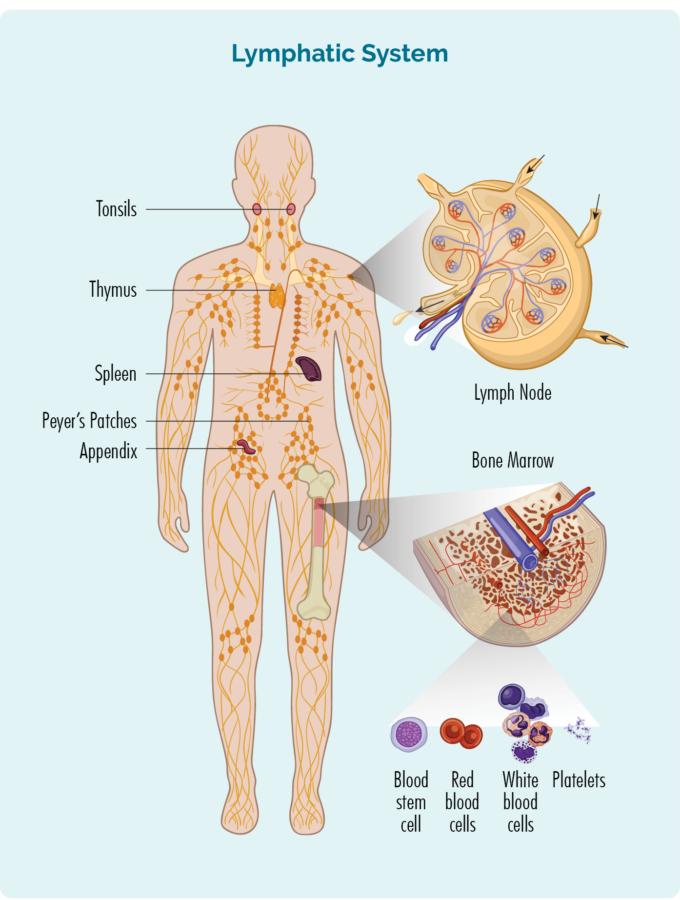
B-cells are made in your bone marrow (the spongy part in the middle of your bones), but live in your spleen and lymph nodes. Some can even live in a gland called your thymus gland – a butterfly shaped organ that sits in the front of your chest, just behind your breastbone.
B-cells can travel to any part of your body to fight infection and disease. PMBCL is a type of lymphoma that begins in your chest area called the mediastinum. Your mediastinum contains important organs and structures including blood vessels and nerves, your thymus, heart, breastbone, trachea (the windpipe that your breath travels through to get to your lungs) and oesophagus (food pipe that connects your mouth to your stomach).
Symptoms
Some of the symptoms you get with PMBCL will be related to the structures within your mediastinal area. These may include:
- Cough
- Pain or aching in your chest
- Changes to your voice
- Feeling out of breath
- Swelling in your neck, arms and/or face
Other symptoms that are common for most types of lymphoma include:
- feeling unusually tired (fatigued)
- feeling out of breath
- losing your appetite – not feeling like eating
- bruising or bleeding more easily than usual
- infections that don’t go away, or keep coming back (recurrent)
- frequent high temperatures (fever) or chills
- sweating at night more than usual – drenching your bedding and clothing
- losing weight without trying
- a new lump in your chest, neck, under your arms, your groin, or other areas of your body. These lumps may or may not hurt, depending on where they are.
- B-symptoms.
B-SYMPTOMS
B-symptoms are a group of three distinct symptoms that some people with lymphoma can get. They often occur together and may indicate that your lymphoma is more advanced. Contact your doctor as soon as possible if you get B-symptoms.
Drenching night sweats – where your clothes and bedding become saturated.
Losing weight without trying, and without other reason.
A high fever of 37.5° or more that keeps coming back or does not go away even when you don’t have an infection. You may even get chills.
Diagnosis and Staging
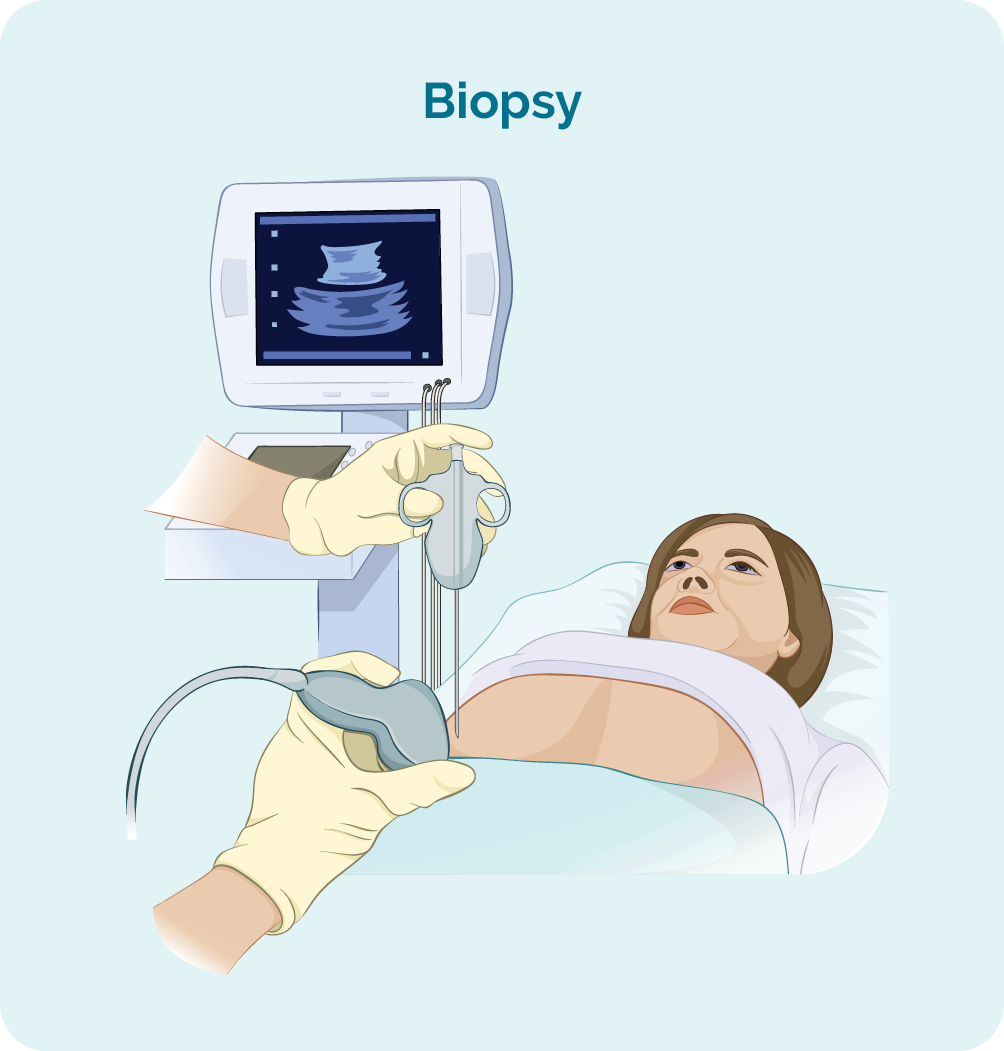
If your doctor suspects you may have lymphoma, you will need a biopsy. A biopsy is a procedure to remove part, or all of an affected lymph node or a sample of your bone marrow. The biopsy is then checked by scientists in a laboratory to see if there are changes that help the doctor diagnose PMBCL. You may have a local or general anaesthetic to make you more comfortable during the biopsy. This will depend on what part of your body the biopsy is taken from.
Some people may need “keyhole surgery” called a “mediastinoscopy” so the doctor can get enough of affected tissue to sample. If you do have a mediastinoscopy, you will have a general anaesthetic and the surgeon will make a small cut over your breastbone. This is usually done as an outpatient procedure, so you will not need to stay in hospital overnight, but you will need someone to take you home and stay with you overnight.
From the biopsy and location of your disease, your doctor will be able to tell you if you have PMBCL.
If you have PMBCL, your doctor will organise more tests to check if it has spread to other parts of your body. These tests are called “staging”.
Because lymphoma cells can travel to any part of your body, your PMBCL stage will depend on how many areas of your body are affected and where those areas are located. You might have Stage 1, 2, 3 or 4.
Staging tests
Staging tests may include:
- Positron Emission Tomography (PET) scan
- Computed Tomography (CT) scan
- Bone Marrow Biopsy
- Lumbar Puncture
You can find more information on staging tests at our website. Just look down the left-hand side to find the test you want more information on: https://www. lymphoma.org.au/lymphoma/testsdiagnosis-and-staging/.
Stage I (1) and II (2) lymphoma are considered early-stage lymphomas, meaning that only one or two areas either above OR below your diaphragm have lymphoma. Stage III (3) lymphoma is considered an advanced stage and means that you have lymphoma on both sides of your diaphragm.
Stage IV (4) lymphoma is the most advanced stage, and means you have lymphoma on both sides of your diaphragm, and in one of your organs such as your liver, lungs, brain, bones or bone marrow.
Before you start treatment
Before you start treatment you will also need to have some baseline tests done. These can include blood tests to check how well your liver and kidneys are working, scans on your heart, or lung function tests. These are to make sure that you are well enough to have treatment without it causing you to become too unwell. Throughout your treatment you will have regular blood tests which will be compared to these baseline tests. You may also have further lung tests and heart scans to make sure that the treatment has not caused any damage to your organs.
Fertility – some cancer treatments can make it harder to fall pregnant, or to get somebody pregnant. If you (or your child) are planning to have children later in life, talk to your doctor about how to preserve your fertility.
Starting treatment can feel overwhelming, and even knowing what questions to ask can be difficult. To help get you started, we have put together some questions you may like to consider asking. Click here to download our Questions to ask your Doctor” factsheet or scan the QR code at the end of this document.
Treatment options
You will start treatment soon after you are diagnosed. This treatment may have a combination of different medicines, including chemotherapies, a monoclonal antibody, and some people may even have radiotherapy.
Radiation/Radiotherapy – Radiation therapy is a cancer treatment that uses high doses of radiation, to kill cancer cells and shrink tumours. Before having radiation, you will have a planning session. This session is important for the radiation therapists to plan how to target the radiation to the lymphoma, and avoid nearby healthy tissue.
Radiation therapy is usually given over 3 to 5 weeks. During this time, you will need to go to the radiation centre everyday (Monday-Friday) for treatment.
If your doctor recommends having radiation treatment you will need to go to appointments every day. If you need help with a place to stay during treatment, please talk to your doctor or nurse about what help is available to you. You can also contact the Cancer Council or Leukemia Foundation in your state and see if they can help with somewhere to stay.
Chemotherapy (chemo) – Chemotherapy are types of medications that kill fastgrowing cells. Because they kill fastgrowing cells, they can be very effective at treating PMBCL. Unfortunately, chemotherapy cannot tell the difference between healthy cells and lymphoma cells, so you can get unwanted side-effects from chemo. These can include hair loss, a sore mouth, nausea and vomiting, diarrhea or constipation.
Monoclonal Antibody (MAB) – Given as an infusion in a cancer clinic or hospital. MABs attach to lymphoma cells and attract other disease fighting white blood cells and proteins to the cancer. This helps your own immune system to fight the PMBCL.
Immune checkpoint inhibitors (ICIs) – Given as an infusion at a cancer centre or hospital. ICIs work to improve your own immune system, so that your own body can fight the cancer. They do this by blocking some of the protective barriers lymphoma cells put up, that make them invisible to your immune system. Once the barriers are removed, your immune system can see and fight the cancer.
Targeted therapy – taken as a tablet either at home or in hospital. Targeted therapies attach to the lymphoma cell and block signals it needs to grow and produce more cells. This stops the cancer from growing and causes the lymphoma cells to die off.
Starting treatment
The first time you start treatment it’s called first-line treatment. First-line treatment lasts for several months and you will have the medicines at regular times. Each time you have the treatment it is called a “cycle”. Once you finish your first-line treatment, you may be cured and not need treatment again.
For some people though, the PMBCL may come back in the future. If this happens it is called a “relapse”. In other people, PMBCL may not go away with your first-line treatment. If this happens it is called “refractory”.
If you have relapsed or refractory PMBCL, you may need a different type of treatment. This new treatment will be called “second line treatment”.
First-line treatment
Some of the more common treatments you may be offered for your first-line treatment include:
R-CHOP – This includes a monoclonal antibody called rituximab (or a medication similar to rituximab called a biosimilar), and 3 different types of chemotherapy called doxorubicin, vincristine and cyclophosphamide. You will also get a steroid called prednisolone and antisickness medicines.
R-EPOCH – This includes the same medications as R-CHOP but has an extra chemotherapy called etoposide (This may also include DA-EPOCH-R. The DA in this means dose adjusted so your doctor may adjust the dose to manage your side effects and symptoms better).
Methotrexate – This is chemotherapy, and may be given to you if you have, or are at risk of getting PMBCL in your brain or spinal cord. The doctor will give you a needle in your back (under sterile conditions), and inject the methotrexate into the fluid surrounding your spinal cord. You may have this with either R-CHOP or R-EPOCH.
Radiotherapy – (as mentioned above)
Clinical trial – These may include targeted therapies and other treatments. Ask your doctor if you are eligible for any clinical trials.
Second-line treatment
If you have relapsed or refractory PMBCL, your doctor will want to give you a different type of treatment, which may work better than the first-line treatment you had. These may include:
- a combination of different chemotherapies and/or monoclonal antibodies or immune checkpoint inhibitors.
- High dose chemotherapy followed by a stem-cell transplant – to learn more about stem cell transplants please see our website here
- chimeric antigen receptor therapy (CAR T-cell therapy) – Please see our factsheet for more information on CAR T-cell therapy. All factsheets are available on our website here.)
- Clinical trial – These may include targeted therapies and other treatments. Ask your doctor if you are eligible for any clinical trials.
Further information on different treatment protocols can be viewed here.
Clinical Trials
Clinical trials are important to find new medicines, or combinations of medicines to improve treatment for people with PMBCL in the future. They may also offer you a chance to try a new medicine, before it would otherwise be available. If you are interested in participating in a clinical trial, ask your doctor what clinical trials you are eligible for. You can also read our ‘Understanding Clinical Trials’ Fact Sheet to find a clinical trial.
Follow Up
Finishing treatment can be a time of mixed emotions. You may feel relieved and excited, or you may feel worried and scared. You may even alternate between all of these emotions. This is very normal. However, you will not be alone. You will continue to see your specialist team on a regular basis, and be checked for any signs and symptoms of your lymphoma relapsing, and your doctor will also want to make sure you’re not having any side effects from your treatment. Your doctor will let you know how often they want to see you, however the longer time you are in remission the less often they will need to see you.
If you have any concerns or worries please contact your healthcare team or contact our lymphoma care nurses on 1800 953 081. You can also email us on nurse@lymphoma.org.au.
Summary
- PMBCL is a type of blood cancer affecting your immune cells called B-cell lymphocytes, which are responsible for making antibodies to fight infection and disease.
- PMBCL begins in your mediastinum (inner centre of your chest) but can spread to other parts of your body.
- Symtoms of PMBCL are often related to the structures in your chest being affected.
- You may be cured or go into remission after treatment.
- Report any new or worsening symptoms to your medical team, including B-symptoms.
Resources and support
Lymphoma Australia offers a wide range of resources and support for people living with lymphoma or CLL, and their carers. How to access our resources:
- Visit our website www.lymphoma.org. au for more information.
- Phone our Lymphoma Care Nurse Hotline on 1800 953 081.
- Email our Lymphoma Care Nurses nurse@lymphoma.org.au
- Booklet: Understanding Non-Hodgkin Lymphoma (NHL)
- Downloadable information: Visit our website, or give us a call if you would like some more information on a variety topics related to lymphoma
- Join our Facebook page Lymphoma Down Under (make sure you complete all the membership questions when you join).
Cancer Council offers a range of services, including free counselling, to support people affected by cancer, including patients, families and friends. Services may be different depending on where you live. You can contact them at www.cancer.org.au or by phone on 13 11 20.
Medicare Australia: Check with your GP if you are eligible for a Mental Health Treatment Plan (MHTP). This plan is funded by Medicare and can provide you with up to 10 sessions with a registered psychologist. More information can be found here.
WeCan is an Australian supportive care website to help find the information, resources and support services you may need following a diagnosis of cancer. You can visit their website at www.wecan.org.au.
Canteen provides support for young people aged 12-25 years who have cancer, or, who have a parent with cancer. Find out more at their website here www.canteen.org.au.
Health Translations: A collection of health related information collected by the Victorian Government with resources in different languages. You can visit their website at www.healthtranslations.vic.gov.au.
Useful links
Car_t-cell webpage
Definitions
eviQ_Lymphoma Treatments
Factsheets
Health translations
Questions to ask your doctor
Stem cell transplants
Treatments website
Understanding clinical trials
Disclaimer: Lymphoma Australia has taken every precaution to make sure the information in this document is accurate and up-to-date. However, this information is intended for educational purposes only and does not substitute for medical advice. If you have any concerns about your health or wellbeing, please contact your treating team.