Learning about your lymphoma can be like learning a new language. It takes time and practice. Please keep this document handy so you can refer back to it as often as you need to. It will become easier to understand the more you read it.
Introduction
Peripheral T-cell lymphoma (PTCL) is a rare and aggressive group of non-Hodgkin lymphomas that can affect children and adults.
There are different subtypes of PTCL and most of them are fast-growing. However, a small number of people with a skin related PTCL will have a slow growing (indolent) lymphoma. Fast growing cancers are sometimes called “aggressive”. If you have an aggressive blood cancer, it usually responds well to treatment. Many people will even be cured.
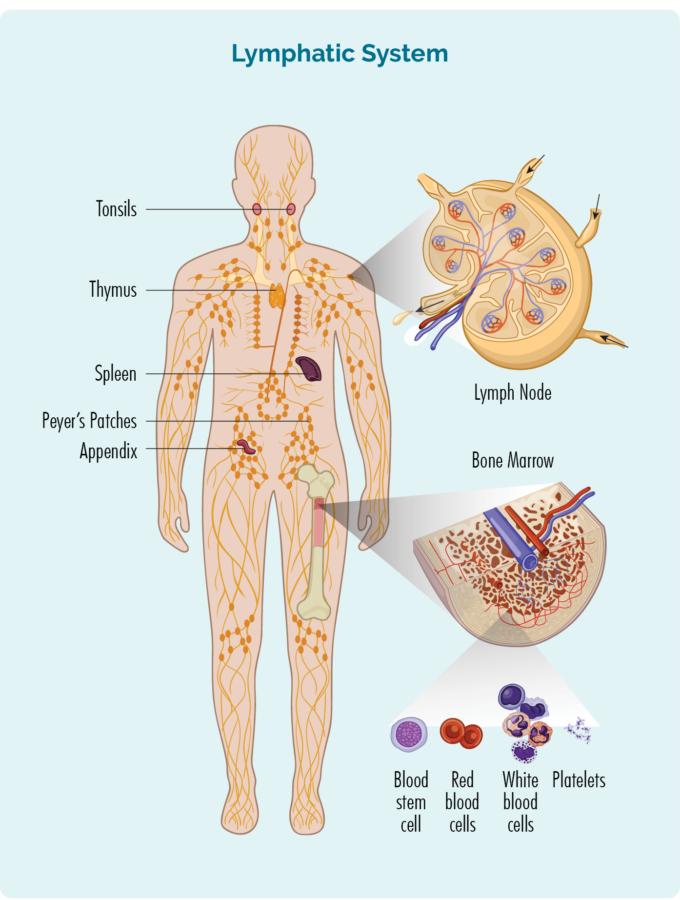
Peripheral T-cell Lymphoma affects a type of white blood cells called T-cell lymphocytes (T-cells) which includes Natural Killer (NK-cells). These cells are made in the middle part of your bones (called bone marrow). They move out when they are very young and into your thymus gland where they mature. Once mature, they live throughout your lymphatic system which includes your:
- organs including thymus, spleen, tonsils, appendix
- lymph nodes and lymphatic tissue including Peyer’s patches
- lymphatic vessels.
What do T-cells do?
T-cells can move to any part of your body to fight infection. Because they can go anywhere, lymphoma can also be anywhere in your body.
T-cells fight infection and disease to keep you healthy. They remember infections you had in the past, so if you get the same infection again, your immune system can fight it more effectively. When you have an infection, some of your T-cells move through your lymphatic system and to the area where your infection is.
When these cells don’t grow or work properly, you can be diagnosed with lymphoma. You will have cancerous T-cells or NK-cells called lymphoma cells.
Signs & Symptoms
You may notice a lump that comes up quickly. These lumps are usually in your neck, armpit or groin. You may even get a lump in your chest or abdomen, but these may be harder to feel.
Other symptoms you may have are:
- feeling unusually tired (fatigued)
- feeling out of breath
- bruising or bleeding more easily than usual
- infections that don’t go away, or keep coming back (recurrent)
- sweating at night more than usual
- losing your appetite (not wanting to eat)
- losing weight without trying
- itchy skin.
Subtypes of PTCL
There are almost 30 different subtypes of PTCL, making each one very rare. These are subdivided into 3 main groups which include:
- Nodal – meaning it starts in your lymph nodes.
- Extra-nodal – meaning it starts in a part of your body not including your lymph nodes.
- Leukemic – meaning it starts in your bone marrow or blood.
Most are aggressive, but one group of subtypes, called Cutaneous T-cell Lymphomas (CTCL) are often slower growing – or indolent. They affect mostly your skin, so are managed differently to other subtypes of PTCL. You can find more information on CTCL here, or you can scan the QR code at the end of this document.
For information on the other subtypes of PTCL please read on.
Peripheral T-Cell Lymphoma Not Otherwise Specified (PTCL-NOS)
About 7 out of every 20 people (35%) with PTCL have PTCL-NOS, making it the most common group of all PTCL subtypes. It is so named because the subtypes in this group have unique characteristics that make it difficult to fit them into any of the other groups. However, they are also too rare to have a group of their own.
PTCL-NOS can begin in your lymph nodes or in other parts of your body including your liver, bone marrow, intestinal tract and skin. If it starts in your lymph nodes it is called nodal, but if it starts in any other part of your body it is called extra-nodal.
PTCL-NOS usually occurs in adults in their 50s and 60s, and many tend to come back (relapse) at some point after treatment ends. If this happens to you, you will need more treatment.
Angioimmunoblastic T-Cell Lymphoma (AITL)
About 1 in 5 people (20%) with PTCL will have an angioimmunoblastic subtype. AITL is a nodal lymphoma that is more common in people aged over 60 years. The most common symptoms of AITL include:
- Swollen lymph nodes
- Fever
- Weight loss.
Some people with AITL will also develop an autoimmune disorder, which is when your own immune system attacks the cells in your body
Anaplastic Large Cell Lymphoma (ALCL)
ALCL affects about 1 in every 10 people (10%) with PTCL. It is identified because it has a specific marker on the surface of the lymphoma cells called CD30. Some treatments called monoclonal antibodies target the CD30 marker, helping your own immune system to fight lymphoma cells with CD30 on them.
ALCL can be:
- Systemic – where it is found mainly in lymph nodes.
- Primary cutaneous type – where it occurs only in the skin (this is covered on our CTCL webpage and factsheet – links above).
- ALK positive – meaning the lymphoma cells produce a protein called “anaplastic large cell kinase (ALK)”. ALK positive lymphomas are more common in children or adults in their mid-30s. However, some older adults can also develop this subtype.
- ALK negative – this is when the lymphoma cells do not produce the protein ALK. This subtype is most common in people around the age of 58 years.
Adult T-Cell Leukaemia/ Lymphoma (ATLL)
ATLL is a rare and often aggressive T-cell lymphoma that can be found in your blood, lymph nodes, skin or other areas of your body. It may be more common in people with an infection called Human T-cell leukemia virus type-1 (HTLV-1).
HTLV-1 can be transmitted during sex, or if you have been exposed to the blood of someone with the virus. However, only about 1 in every 20 people (5%) with HTLV1 will go on to develop ATLL.
Enteropathy-associated T-Cell Lymphoma (EATL)
EATL is a very rare extra-nodal PTCL subtype. The lymphoma generally develops in your small intestine or colon (bowels). One subtype of EATL is more common in people with celiac disease – an autoimmune disorder affecting your bowels. However, other subtypes of EATL have no link to celiac disease.
Symptoms are usually related to your bowels and can include:
- abdominal (tummy) pain
- weight loss
- diarrhoea
- obstruction or blockage in your bowels
Nasal NK/T-Cell Lymphoma (NKTCL)
NKTCL is a rare subtype which develops from NK cells. People who have had a virus called Epstein Barr virus that causes glandular fever are more likely to develop NKTCL.
NKTCL usually starts in your nasal and upper airway passages, but can also involve other organs (extra-nodal) including your gastrointestinal tract, and skin.
Hepatosplenic Gamma Delta T-Cell Lymphoma
This is an extremely rare extra-nodal lymphoma. It can develop and spread through your body including your liver, spleen, blood and bone marrow, making it a systemic form of lymphoma. It is most common in young adults, and more common in males than in females.
Hepatosplenic Gamma Delta T-cell lymphoma can be difficult to diagnose. You will likely need a biopsy of your liver or spleen to get a diagnosis.
Diagnosis
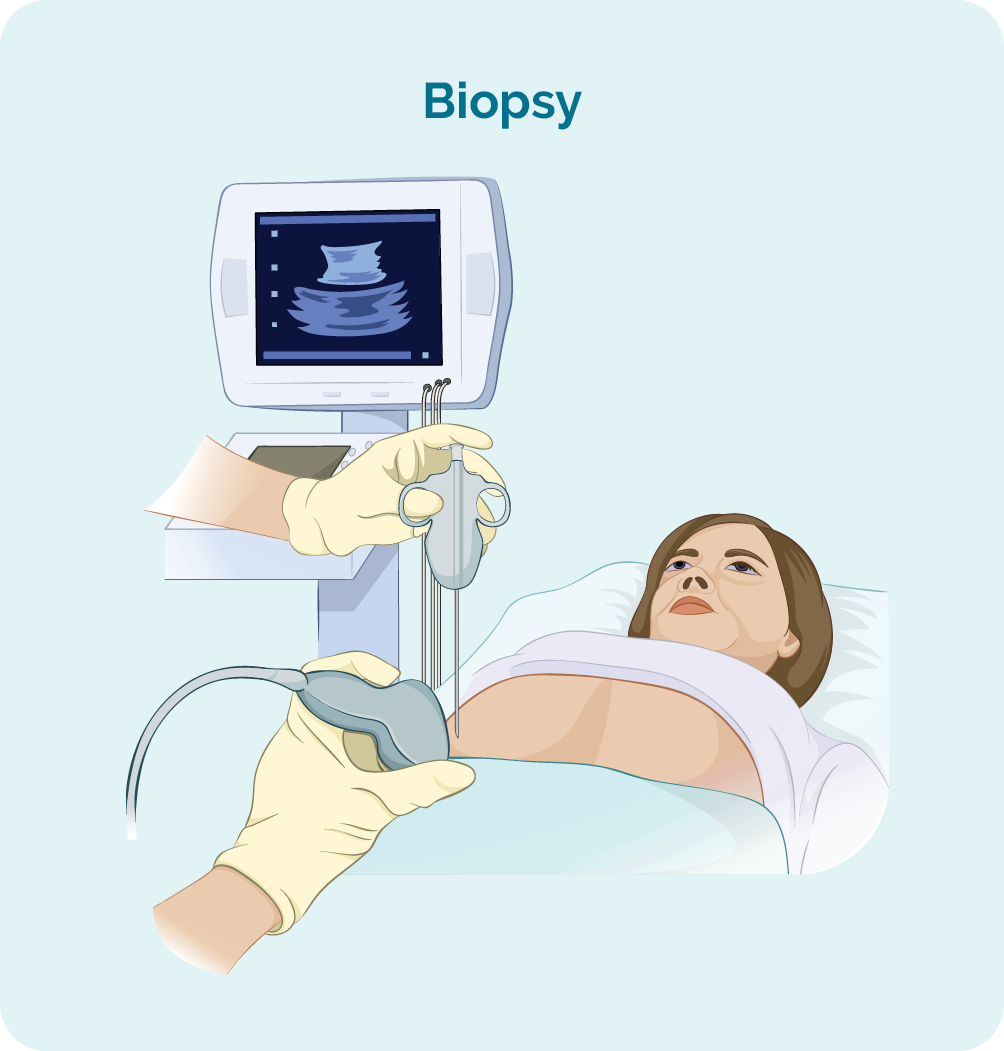
If your doctor thinks you have PTCL you will need a biopsy. A biopsy is a procedure to remove part or all of an affected lymph node, or a sample of your bone marrow. The biopsy is checked by scientists, to see if there are changes that help the doctor diagnose a PTCL.
When you have a biopsy, you may have a local or general anaesthetic. This will depend on your age and what part of your body the biopsy is taken from.
Staging
When you are diagnosed with PTCL, your doctor will organise more tests to check if it has spread to other parts of your body. These tests are called “staging”. Your stage will depend on where your lymphoma cells are, and how many parts of your body have the lymphoma.
Early stage PTCL refers to stage 1 or stage 2. In these stages all your lymphoma is either above your diaphragm or below diaphragm.
Stage 3 and 4 PTCL is considered advanced. If you have advanced PTCL you will have lymphoma growing on both sides of your diaphragm. Stage 4 will also include an organ such as your brain, skin, liver, lungs or bone.
Although it may seem scary, even advanced stage 4 PTCL may be cured with treatment.
Staging tests
- Positron emission tomography (PET) scan
- Computed tomography (CT) scan
- Bone marrow biopsy
- Lumbar puncture
You can find more information on staging tests at our website. Just look down the left-hand side to find the test you want more information on: https://www. lymphoma.org.au/lymphoma/testsdiagnosis-and-staging/
Before you start treatment
Before you start treatment you will also need to have some baseline tests done. These can include blood tests to check how well your liver and kidneys are working, scans on your heart, or lung function tests. These are to make sure that you are well enough to have treatment without it causing you to become too unwell. Throughout your treatment you will have regular blood tests which will be compared to these baseline tests. You may also have further lung tests and heart scans to make sure that the treatment has not caused any damage to your organs.
Fertility – some cancer treatments can make it harder to fall pregnant, or to get somebody pregnant. If you (or your child) are planning to have children later in life, talk to your doctor about how to preserve your fertility.
Questions to ask your doctor
Starting treatment for your lymphoma can be very overwhelming, but having the right information can help you to prepare and feel more confident. We have put together some questions that might help when you go to your appointment. You can download these here, or scan the QR code at the end of the document.
Treatment options
PTCL is aggressive, so you will start treatment soon after you are diagnosed.
Treatment is often a combination of different chemotherapy medications which work together to kill fast growing cells.
You may also be offered a stem cell transplant. This is not suitable for everyone but may work if there is a high chance your lymphoma will come back after treatment, and you are relatively fit and healthy.
A stem cell transplant is a complex procedure that aims to destroy all the cells in your bone marrow to kill off the lymphoma. These cells are then replaced with healthy stem cells that can grow into healthy cells.
Remission, Relapse and Refractory disease
You may go into remission after treatment and have no signs of PTCL left. However, in rare cases the PTCL may not respond to treatment, or may come back after a period of remission. When your PTCL does not go away after treatment it is called “refractory”. When it comes back after a time of remission, it is called a “relapse”.
If you have refractory disease or have relapsed, your doctor may offer you a different type of treatment with different medications. They may also suggest you enrol in a clinical.
You may also be offered radiotherapy if the PTCL is not too wide spread.
More information on types of treatment can be found here.
Clinical Trials
Clinical trials are important because they help find new treatments. They can offer you the opportunity to try something new for free, that you would otherwise not have access to, or otherwise have to pay for. Some clinical trials may look at:
- how to treat PTCL
- safe doses to treat PTCL with less side-effects
- managing side-effects
It is always worth asking your doctor what clinical trials you are eligible for, to see if any are of interest to you. You can also look online for clinical trials yourself at the ClinTrial Refer website https://clintrialrefer. org.au/. If you would like more information on clinical trials, please see our fact sheet Understanding Clinical Trials here.
Follow up
Once you finish treatment, you will still see your specialist doctor on a regular basis. How often will depend on your personal situation. Your doctor will let you know how often they want to see you. The purpose of these appointments are to:
- see how you are coping after finishing treatment – both mentally and physically.
- check that your body is recovering from the effects of chemo and other treatments.
- monitor you for any signs of lasting or delayed side-effects.
- monitor you for signs of relapse (lymphoma coming back), so that any further treatment can start early
Summary
- PTCL is a type T-cell nonHodgkin Lymphoma.
- There are different subtypes of PTCL and it can affect adults and children. If you don’t know your subtype, ask your doctor.
- Most PTCLs are aggressive fastgrowing), but PTCL of the skin may be slower growing.
- PTCL can start in your lymph nodes, organs or your blood and bone marrow.
- PTCL often responds well to treatment resulting in remission, but it may come back at a later time.
- Report any new or worsening symptoms to your doctor.
Resources and support
While many people look forward to finishing treatment, for some it can be a time of uncertainty and worry. It is normal to think about what happens next, to worry about if the cancer will come back, or to be frustrated if life does not go back to normal quickly enough.
There are a lot of resources and support to help you during this time. You can contact our lymphoma care nurses on 1800 953 081 or email nurse@lymphoma.org.au . You can also find a variety of factsheets on our website for supportive care here.
You can also find us on social media where you can connect with others who are living with, or who have beaten lymphoma.
Lymphoma Australia offers a wide range of resources and support for people living with lymphoma or CLL, and their carers. How to access our resources:
- Visit our website www.lymphoma.org. au for more information.
- Phone our Lymphoma Care Nurse Hotline on 1800 953 081.
- Email our Lymphoma Care Nurses nurse@lymphoma.org.au
- Booklet: Understanding Non-Hodgkin Lymphoma (NHL)
- Downloadable information: Visit our website, or give us a call if you would like some more information on a variety topics related to lymphoma
- Join our Facebook page Lymphoma Down Under (make sure you complete all the membership questions when you join).
Cancer Council offers a range of services, including free counselling, to support people affected by cancer, including patients, families and friends. Services may be different depending on where you live. You can contact them at www.cancer.org.au or by phone on 13 11 20.
Medicare Australia: Check with your GP if you are eligible for a Mental Health Treatment Plan (MHTP). This plan is funded by Medicare and can provide you with up to 10 sessions with a registered psychologist. More information can be found here.
WeCan is an Australian supportive care website to help find the information, resources and support services you may need following a diagnosis of cancer. You can visit their website at www.wecan.org.au.
Canteen provides support for young people aged 12-25 years who have cancer, or, who have a parent with cancer. Find out more at their website here www.canteen.org.au.
Health Translations: A collection of health related information collected by the Victorian Government with resources in different languages. You can visit their website at www.healthtranslations.vic.gov.au.
Useful links
Facebook Support Group Lymphoma Down Under
Questions to ask your Doctor before you start treatment
Lymphoma Australia – Peripheral T-cell Lymphoma webpage
Lymphoma Australia – Treatments
eviQ Lymphoma Treatment Protocols
Disclaimer: Lymphoma Australia has taken every precaution to make sure the information in this document is accurate and up-to-date. However, this information is intended for educational purposes only and does not substitute for medical advice. If you have any concerns about your health or wellbeing, please contact your treating team