Rick’s Journey: Stupid Bloody Questions Helped Me Get Through
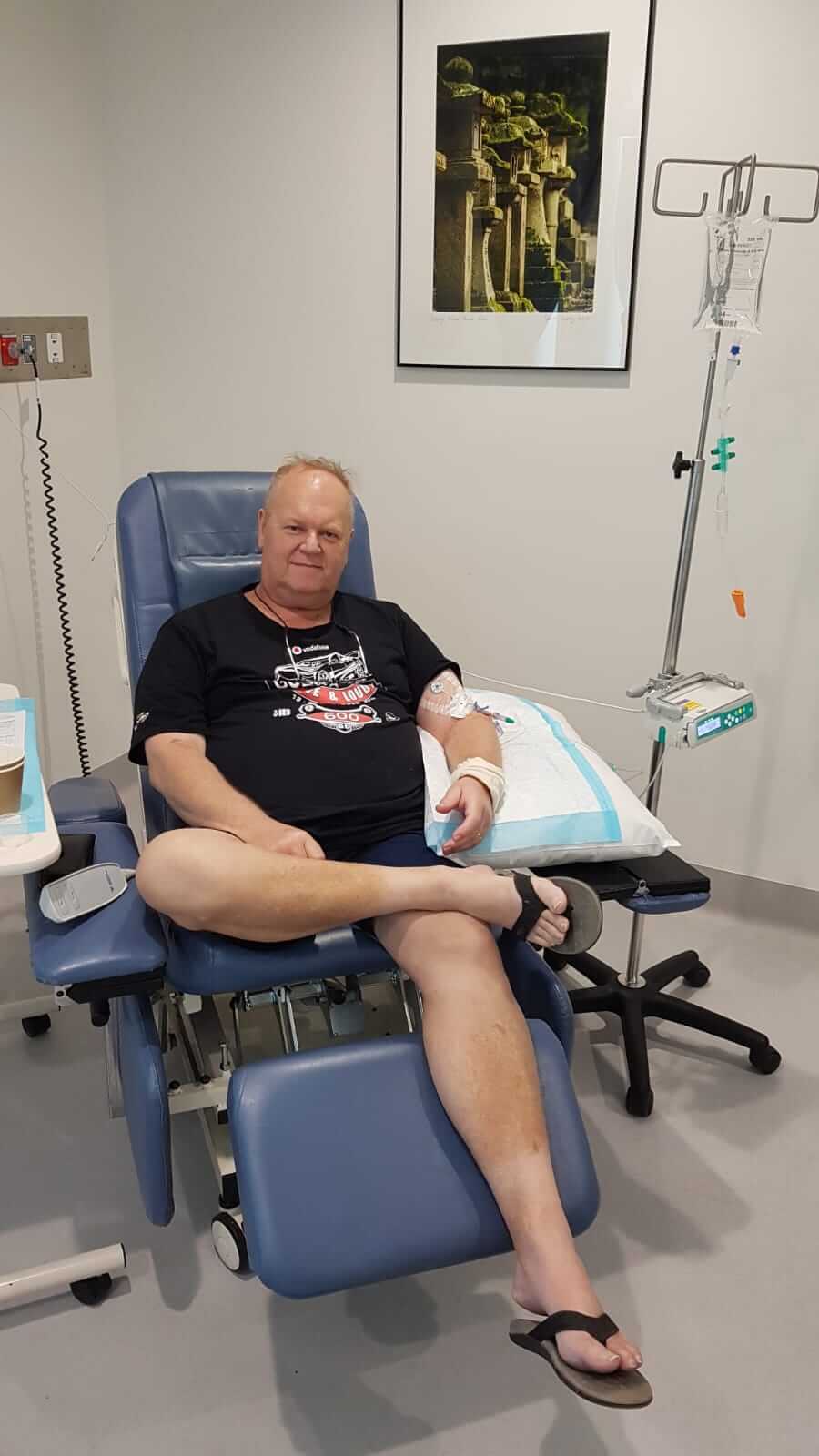 Rick Barnes’ Mantle Cell Lymphoma Story
It’s hard to believe that exactly 12 months ago I was sitting in my doctor’s office thinking I had a minor infection. Blood tests taken were just a mere formality I thought, so I sat there waiting for her to write out a prescription for some antibiotics. I wasn’t expecting to hear what came next.
My blood test showed an anomaly.
“It looks like you may have leukaemia. Blood cancer.”
I normally process things quickly, but this threw me. Cancer? Not me, I was numb and felt absolutely nothing. All I could think of was F**k! My emotions completely deserted me.
I rang my wife to meet me at home. This wasn’t something I could say over the phone. Once I had given her the news we just sat there for a while in silence trying to comprehend how our lives were about to be turned upside down.
Then the questions started.
How do we tell the kids?
How do we pay the mortgage?
How much will this cost us?
What about our plans for the future?
We had no answers and had no idea of what to expect. We knew nothing about what was about to hit us. All we could do that day was show up at the hospital. A few days later I was diagnosed with Mantle Cell Lymphoma in December 2018.
From day one, my employer at the time removed any financial fear by committing to pay my full salary during treatment. The pressure that lifted was incredible. I could focus fully on my physical and mental recovery without monetary distraction.
I think their actions greatly contributed to my positive outlook of beating this thing.
Not long after my first chemo cycle, my daughter decided to shave her head in support. She set a $500 target. I told her that wasn’t much money to shave her head for. She replied she’d do it for nothing if it meant I didn’t have to go through what I was going through. She went on to raise $14,000! To this day I can’t believe the amount that she raised.
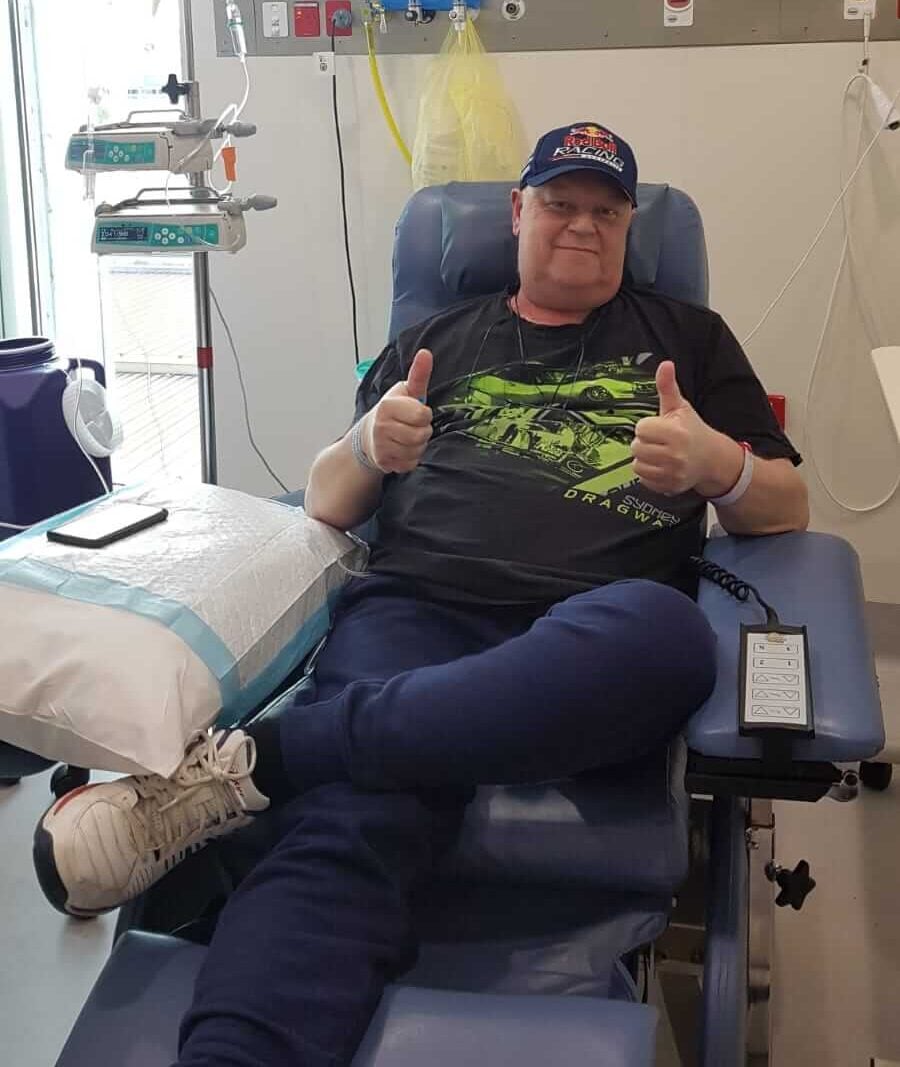
What unleashed after that was nothing but absolute pain and misery. For 6 months I had toxic chemicals pumped through my body – so toxic my wife had to glove up for seven days after each chemo session to protect her from any fluids I may accidently release. I underwent seven cycles (6 x R-Maxi CHOP and BEAM therapy) before an Autologous Stem Cell Transplant.
The treatment damaged the lining of my digestive tract making the most basic of bodily functions sheer agony. I suffered infection after infection. Blood clots filled my left arm from the PICC line. It rendered my arm useless for a period of time. Blood clots also formed in my neck from the Hickman line that was later surgically implanted after the arm episode. Three times I had to have the Hickman line removed and reimplanted due to infection.
Through all of this, I asked questions, I wanted to know what was going on, what drugs were being pumped into me and why, and what were the possible side effects. I‘d often heard the saying “knowledge is power” – and I can say firsthand that it is. Asking what some might call “stupid bloody questions” and challenging my medical team to think outside the box helped me mentally. Being naturally curious, some may say arrogant, helped.
Exercise and diet looked after the physical side. I found the Lymphoma Australia website full of knowledge and support, and I attended webinars and spoke with the nurses which helped me feel at ease.
I’d often sit in my chair while the chemicals were being administered and watch other patients around me. You could tell the ones that had no fight in them. They were the ones who just sat there hour after hour, just shrugging their shoulders and sighing when told what was going to be done to them. They didn’t want to know. I, on the other hand, needed to know everything. I’m convinced the nurses thought I was a pain in their butts due to my inquisitive and sometimes “stupid bloody questions”.
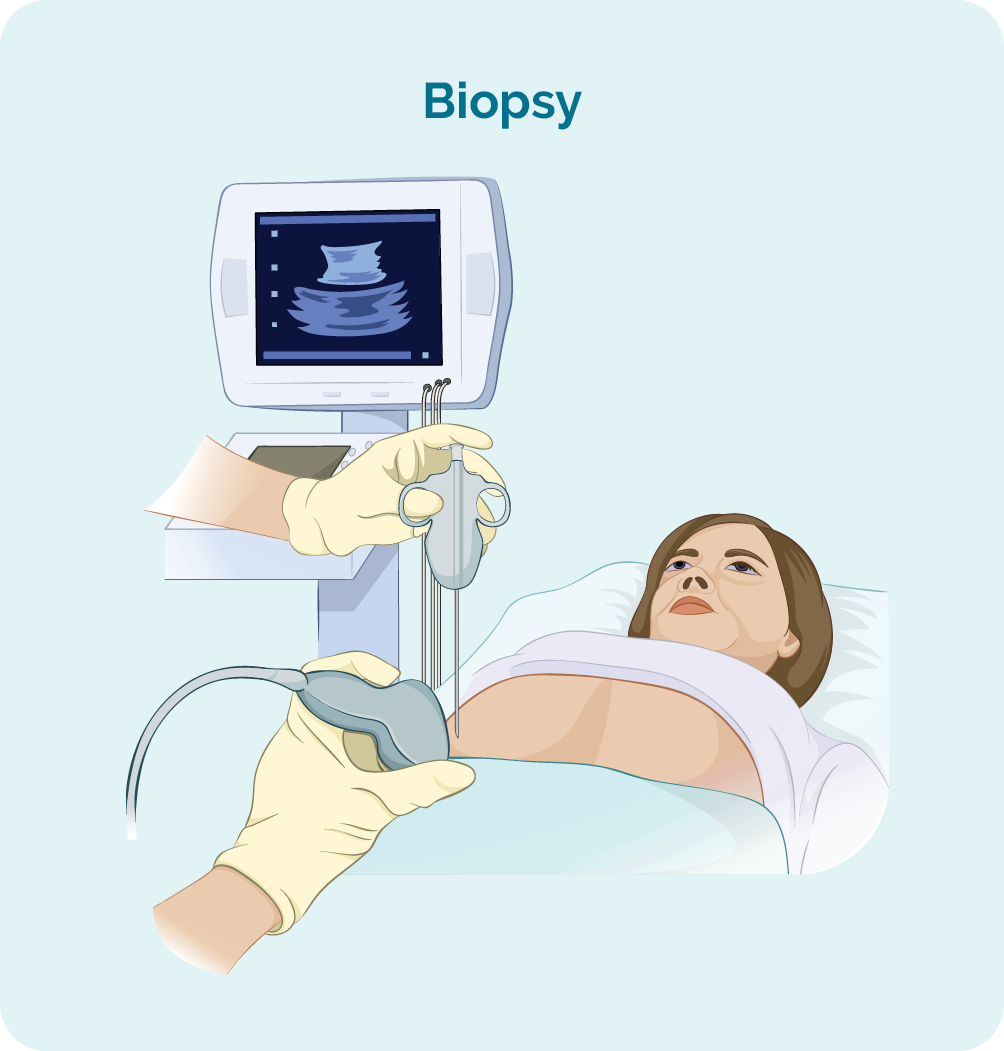
Then there were all the tests; There were up to three blood test a week, sometimes four in a day. Constant injections – 3 a day for 10 days prior to the harvesting of my stem cells, the scans, the x-rays and I can’t forget the 3 bone marrow biopsies where they drill into your hip bone and extract the bone marrow for testing. In total, I had more than 130 blood tests and 50 or 60 injections.
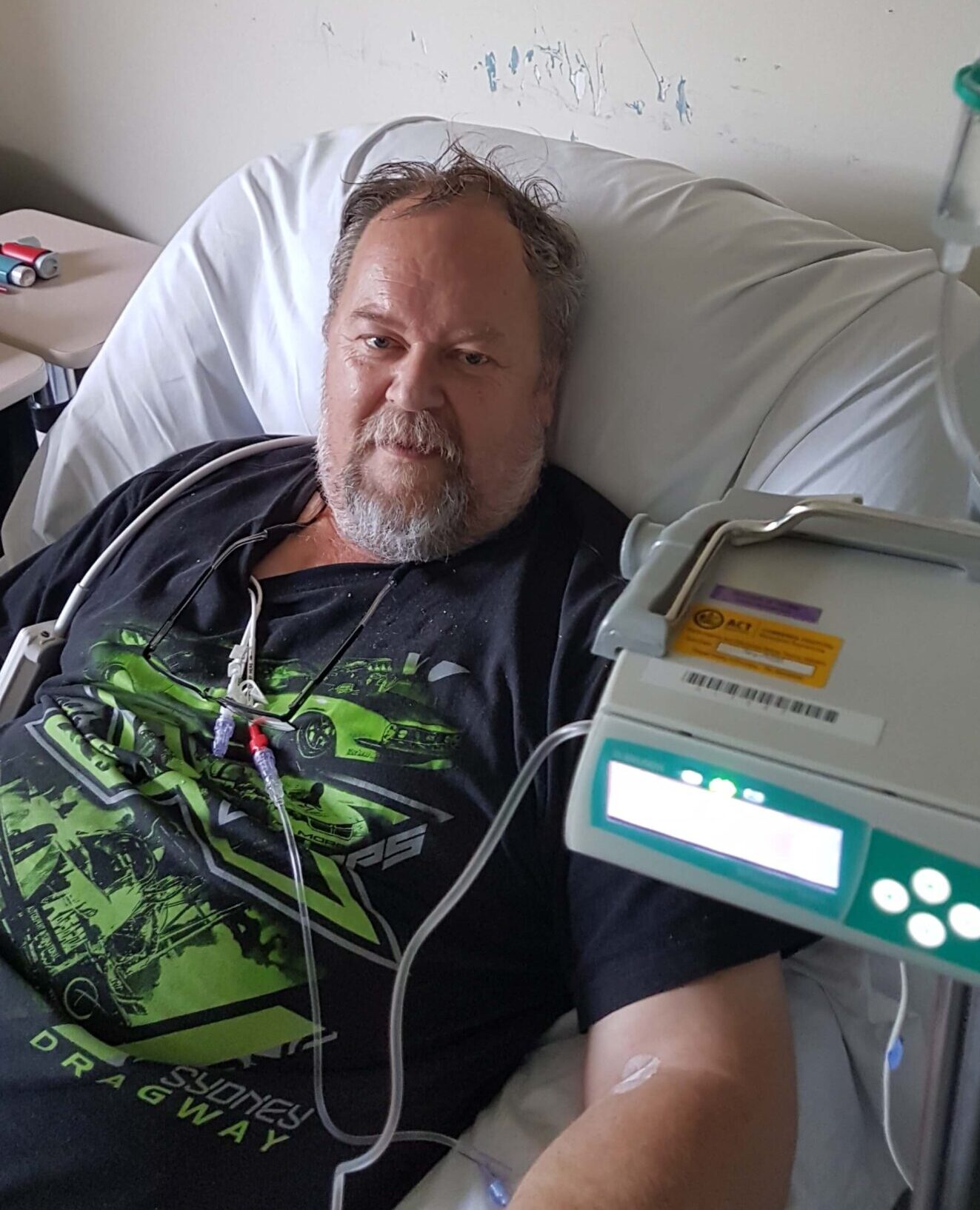 But I wasn’t going to let this thing beat me.
My darkest moment came during stem cell harvesting. Once extracted these are put in cold storage for future re-infusion. For 6 hours I was hooked up to a centrifuge type thingy (amazing bit of equipment by the way) which pumped the blood in and out of my body 18 times to collect enough stem cells for transplant. Believe me after 6 hours lying in what can only be called the crucifix position you lose logical thought. The demons creep in. Fortunately, once the process is over, composure returned quickly.
Transplant day itself was almost an anti-climax. What people don’t always realise is that a stem cell transplant wipes out your immune system completely — including any previous vaccinations. I’ll now need to have my childhood vaccinations all over again.
In the weeks that followed there were close calls. My system crashed. I had to be resuscitated. I’m told my blood pressure dropped to around 70/30, my heart rate went over 200, and my temperature peaked at 43 degrees. I don’t remember much of it. I’m convinced we have an inbuilt mechanism that shields us from severe trauma.
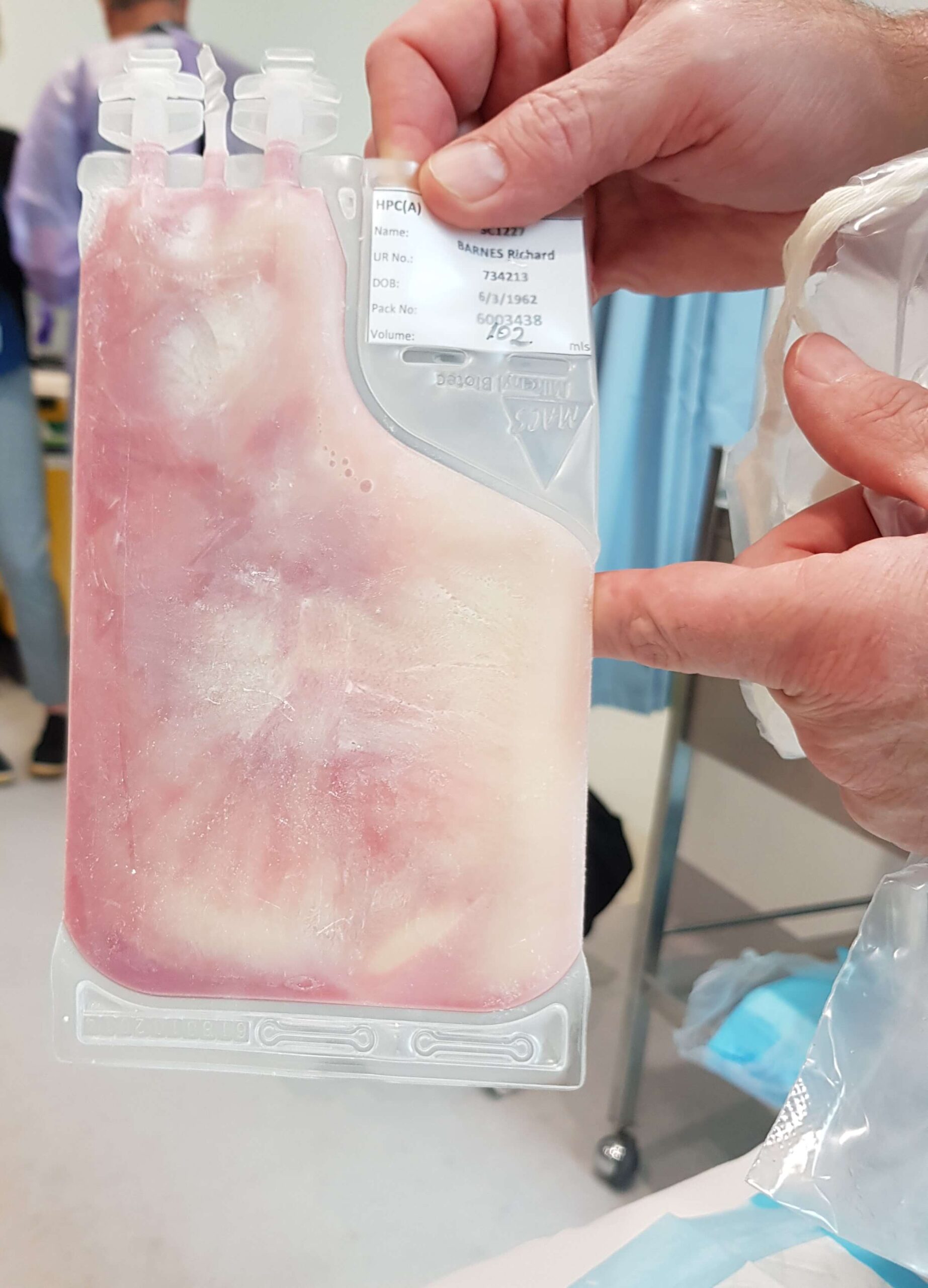 Unfortunately, my wife witnessed it.
I’ve been asked many times how I got through it. Simply put – when you’re going through hell, you put your foot down and drive flat out till you come out the other side.
I couldn’t have done it without the unconditional love and support of my wife, my family and friends, and the incredible nurses and medical staff. I had so many look after me, there are too many to mention, but you know who you all are.
I learnt something about nurses; they don’t do the job for the money. They do it for the love of wanting to make a difference and help people. I strongly believe they do it because it’s a calling. They genuinely want to make a difference. They should all have wings on their shoulders.
The emotions my wife and I have gone through have been from the highest of highs to the lowest of lows.
Would I put myself through it again? Possibly, I learnt a lot about myself.
Would I want to see anyone else go through it? An emphatic no!
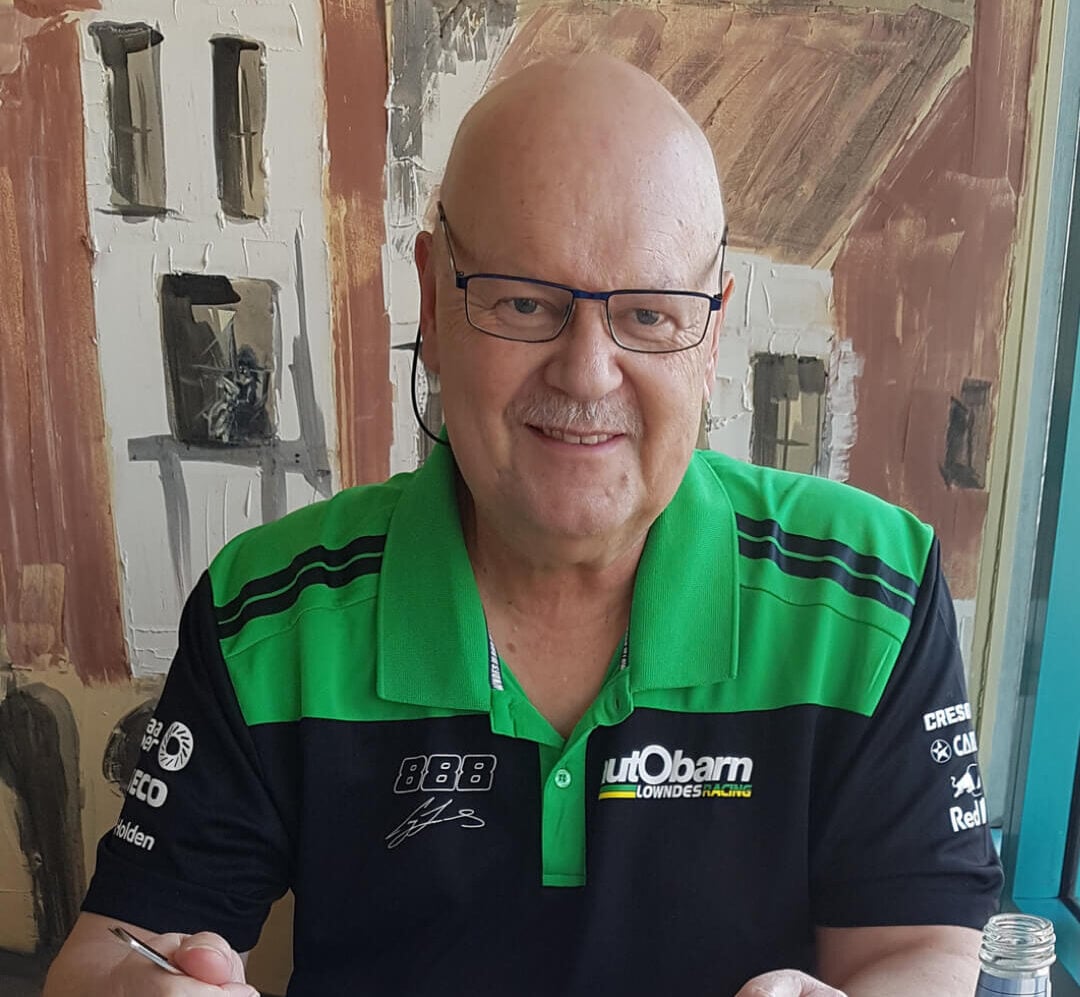
Diagnosed in December 2018, I went into remission in July 2019 after surviving the transplant.
Now I’m able to look back and see just how far we had come. After treatment, my wife and I finally took a long-awaited trip to Darwin and Uluru. I am now retired, and we travel whenever we can. Today, I’m looking forward to what lies ahead.