Learning about your lymphoma can be like learning a new language. It takes time and practice. Please keep this document handy so you can refer back to it as often as you need to. It will become easier to understand the more you read it.
Overview
Angioimmunoblastic T-cell Lymphoma (AITL) is a subtype of Peripheral T-cell Lymphoma (PTCL) which is a type of Non-Hodgkin Lymphoma (NHL). It happens when some of your white blood cells – called T-cell lymphocytes – become cancerous. It is more common in older adults, but can affect people of any age.
T-cells are an important part of your immune system that help to keep you healthy by fighting infection and disease. They are specialised cells that remember infections you had in the past, and create very specific memory T-cells to fight the infection quicker and more effectively if you get the same infection again.
AITL is usually an aggressive type of lymphoma, which means it grows quickly, and needs treatment very soon after you are diagnosed. In some rarer cases, it may be indolent which is slower-growing and you may not need treatment immediately. Your doctor will be able to talk to you more about your individual subtype of AITL.
About T-cell lymphocytes (T-cells)
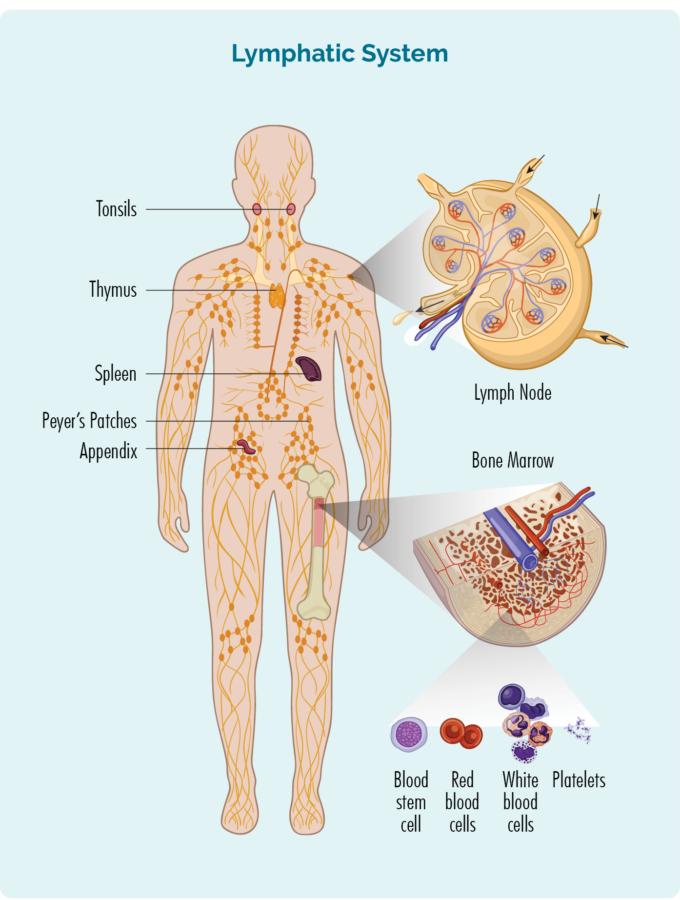
Although T-cell lymphocytes are a type of blood cell, they live mostly in our lymphatic system rather than in our blood. They are made in our bone marrow – the spongey, middle part of our bones, but then move out into our lymphatic system and to an organ called our thymus. Once in the thymus, T-cells continue to grow and mature. Some T-cells also live in our lymph nodes and spleen. However, because of their specialised role in fighting infection and disease, they can travel to any part of our body, including our skin, blood, and different organs.
We also have patches of “lymphoid tissue” – including lymphocytes in different areas of our body such as in our stomach or bowels – where it is called Peyers Patches (see the Lymphatic system picture). AITL can start in, and spread to any of these areas outside of the bone marrow, but can also spread to the bone marrow when it becomes more advanced.
Signs & Symptoms
Signs and symptoms of AITL can be different between different people, because some symptoms will depend on what part of your body is affected by the lymphoma.
B-symptoms refer to fever, weight loss or night sweats (see picture) that can occur when the lymphoma is growing quickly. Let your doctor know if you are getting B-symptoms.
Other symptoms can include swollen lymph nodes that appear as lumps you can see or feel. Most commonly these lumps are found in your armpits, neck and/or groin. This is caused by too many cancerous lymphocytes gathering in the lymph nodes, making the nodes swollen.
Other symptoms can include:
- A rash or hardened patches of skin, which can be in one area or all over your body.
- Itchiness with or without a rash.
- Infections that keep coming back or are difficult to get rid of.
- Fatigue – a tiredness that is extreme and is not improved after rest or sleep.
- Swelling in your abdomen (tummy).
- Difficulty breathing or shortness of breath.
- Loss of appetite or feeling full after eating only small amounts.
- Unusual bleeding or bruising.
- Aches and pains in your muscles and joints.
- Changes to your vision or hearing.
- Diarrhea.
Diagnosis
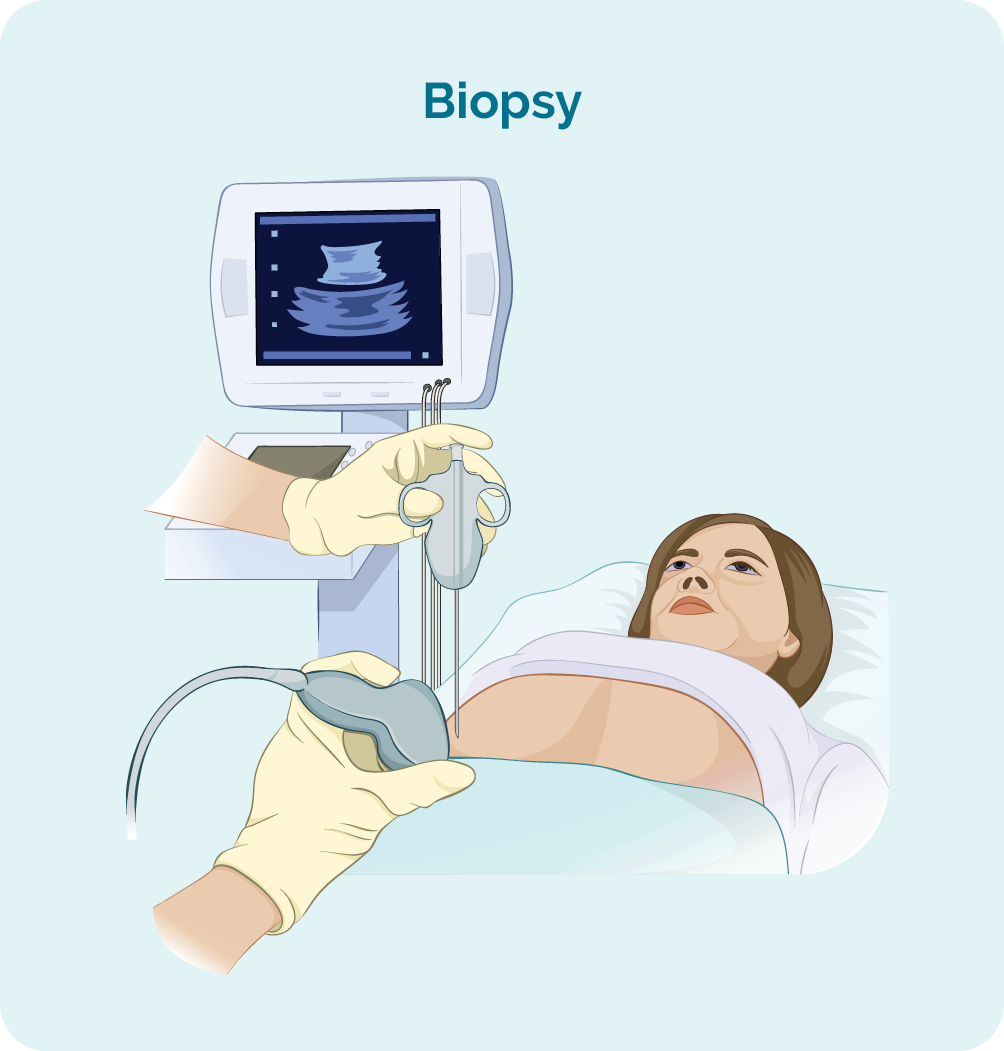
You will need a biopsy to diagnose AITL. A biopsy is a procedure to remove part or all of an affected lymph node, a sample of your bone marrow, or other area affected by the lymphoma. Once the sample is taken it is sent to pathology, where scientists check for cancerous changes to your cells.
Depending on where your lymphoma is and where the biopsy is being taken from, you may need to have either a local or general anaesthetic. Young children will have a general anaesthetic so that they can remain still during the procedure.
If your biopsy comes back positive for AITL, which means you do have this type of lymphoma, your doctor will organise more tests to see if it has spread to other parts of your body. These next tests are called staging tests.
Staging
Staging refers to how many, and what parts of your body are affected by lymphoma
Staging tests may include:
- Positron Emission Tomography (PET) scan
- Computed Tomography (CT) scan
- Bone Marrow Biopsy
- Lumbar Puncture
- Skin Biopsy – if you have a rash or changes to your skin.
You can find more information on staging tests at our website. Just look down the left-hand side to find the test you want more information on: https://www. lymphoma.org.au/lymphoma/testsdiagnosis-and-staging/.
Stage I (1) and II (2) AITL are considered early-stage lymphomas, meaning that only one or two areas either above OR below your diaphragm have lymphoma. Stage III (3) lymphoma is considered an advanced stage and means that you have lymphoma on both sides of your diaphragm.
Stage IV (4) lymphoma is the most advanced stage, and means you have lymphoma on both sides of your diaphragm, and in one of your organs such as your liver, lungs, brain, bones or bone marrow.
Most people with AITL are diagnosed with stage 3 or 4
Before you start treatment
Before you start treatment you will also need to have some baseline tests done. These can include blood tests to check how well your liver and kidneys are working, scans on your heart (echocardiogram), or lung function tests.
Baseline tests are done to make sure that you are well enough to have treatment without it causing you to become too unwell. Throughout your treatment you will have regular blood tests which will be compared to these baseline tests. You may also have further lung tests and heart scans to make sure that the treatment has not caused any damage to your organs.
Questions to ask your doctor
It is important that you ask your doctor any questions you may have before you start treatment. But it can be hard to know what questions to ask. Click here, or scan the QR code at the end of this document to download questions you may like to think about asking your doctor.
Fertility
Some cancer treatments can make it harder to fall pregnant, or to get somebody pregnant. If you (or your child) are planning to have children later in life, talk to your doctor about how to preserve your fertility.
First-line treatment
Once you have had your tests and your doctor has all your results they will talk to you about the best treatment for your individual circumstance. The first time you start treatment it is called firstline treatment.
The most common first-line treatments for AITL include a combination of different chemotherapy medications including:
- CHOP – cyclophosphamide, doxorubicin, vincristine and a steroid called prednisolone.
- CHOEP – the same as CHOP but with an extra chemotherapy called etoposide.
- You may also be offered (or you can ask) to join a clinical trial if there is one available for your stage of AITL.
- Stem cell transplant (For more information click here or scan the QR code at the end of this document).
Many people, even with stage 3 or 4 AITL can respond well to treatment with chemotherapy, and go into remission where there is no evidence of lymphoma left in your body. However, it is not uncommon for the AITL to come back. If it comes back it is called a relapse, and you may need more treatment.
If you are at high-risk of your AITL relapsing, your doctor may suggest you have a stem cell transplant which helps to keep you in remission longer, and may even stop it from relapsing.
Some people may not respond to firstline treatment and the lymphoma remains or continues to grow while you’re having treatment. If your AITL doesn’t respond to treatment, it is called “refractory”. Your doctor will offer you a different type of treatment that may work better for you if this happens.
The treatment you have after a time of remission, or if your AITL is refractory is called Second-line treatment.
Second-line treatment
It is not uncommon for AITL to be refractory or relapse after a short time of remission. When this happens, you will need to start another type of treatment. The type of Second-line treatment you are offered will depend on the treatments you have had before, how long you have been in remission (if you had a time of remission), your overall health and your preferences after getting all the information from your doctor. Some types of second-line treatment include:
- A combination of different chemotherapies
- Pralatrexate (Foltyn™)
- Romidepsin (Istodax™) – (not currently PBS listed)
- Stem cell transplant
- Radiotherapy
- Clinical trial
Clinical trials
Clinical trials are an important way to find new medicines, or new combinations of medicines to try to improve treatment or lessen side-effects. They may also offer you the opportunity to try treatment options that you would not otherwise be able to access. Without clinical trials we would not have many of the treatments we have today.
New clinical trials are starting all the time to try and find the best way to treat AITL, while making sure you continue to have the best quality of life. If you are interested in joining a clinical trial, ask your doctor what clinical trials are available to you. You can also read our “Understanding clinical trials” fact sheet for more information, and links to websites that you can visit to find a clinical trial yourself.
Follow up
Finishing treatment can be a time of mixed emotions. You may feel relieved and excited, or you may feel worried and scared. You may even alternate between all of these emotions. This is very normal. However, you will not be alone. You will continue to see your specialist team on a regular basis, and be checked for any signs and symptoms of your lymphoma relapsing.
Your doctor will also want to make sure you’re not having any side effects from your treatment.
Your doctor will let you know how often they want to see you. Often, the longer time you are in remission, the less often they will need to see you. If you have any concerns or worries please contact your healthcare team or contact our lymphoma care nurses on 1800 953 081. You can also email us on nurse@lymphoma.org.au.
Summary
- AITL is a subtype of Peripheral T-cell lymphoma, a type of NonHodgkin Lymphoma.
- It happens when your T-cell lymphocytes become cancerous.
- T-cell lymphocytes are white blood cells that help fight infection and disease, so are an important part of your immune system.
- Despite being blood cells, most of our T-cell do not live in our blood – they live mostly in our thymus and other parts of our lymphatic system.
- T-cells can travel to any part of our body, therefore AITL can begin in any part of your body.
- Symptoms can vary because many will depend on where the lymphoma is in your body.
- B-symptoms and swollen lymph nodes are common symptoms, and you should contact your doctor if you notice you are getting these.
- Treatment is required for most patients soon after the diagnosis is confirmed.
- It is not uncommon for AITL to relapse, or be refractory so you may need treatment more than once.
- You will continue to see your specialist doctor even after treatment finishes.
- You can contact us at any time before, during or after treatment – you are not alone.
Resources and support
Lymphoma Australia offers a wide range of resources and support for people living with lymphoma or CLL, and their carers. How to access our resources:
- Visit our website www.lymphoma.org.au for more information.
- Phone our Lymphoma Care Nurse Hotline on 1800 953 081.
- Email our Lymphoma Care Nurses nurse@lymphoma.org.au
- Booklet: Understanding Non-Hodgkin Lymphoma (NHL)
- Downloadable information: Visit our website, or give us a call if you would like some more information on a variety topics related to lymphoma
- Join our Facebook page Lymphoma Down Under (make sure you complete all the membership questions when you join).
Cancer Council offers a range of services, including free counselling, to support people affected by cancer, including patients, families and friends. Services may be different depending on where you live. You can contact them at www.cancer.org.au or by phone on 13 11 20.
Medicare Australia: Check with your GP if you are eligible for a Mental Health Treatment Plan (MHTP). This plan is funded by Medicare and can provide you with up to 10 sessions with a registered psychologist. More information can be found here.
WeCan is an Australian supportive care website to help find the information, resources and support services you may need following a diagnosis of cancer. You can visit their website at www.wecan.org.au.
Canteen provides support for young people aged 12-25 years who have cancer, or, who have a parent with cancer. Find out more at their website here www.canteen.org.au.
Health Translations: A collection of health related information collected by the Victorian Government with resources in different languages. You can visit their website at www.healthtranslations.vic.gov.au.
Useful links
Bone marrow biopsy
Definitions
Facebook Lymphoma down under
Health translations
PTCL webpage
Questions to ask your doctor
Stem cell
Tests diagnosis staging
Treatments
Understanding clinical trials
Disclaimer: Lymphoma Australia has taken every precaution to make sure the information in this document is accurate and up-to-date. However, this information is intended for educational purposes only and does not substitute for medical advice. If you have any concerns about your health or wellbeing, please contact your treating team.